







What's Happening?
A new documentary, 'The Vegan Poultry Farmer,' follows Ruud Zanders, a Dutch poultry farmer who grapples with the moral complexities of raising animals for food while adhering to a vegan diet. Filmmaker Kadir van Lohuizen documents Zanders' global journey
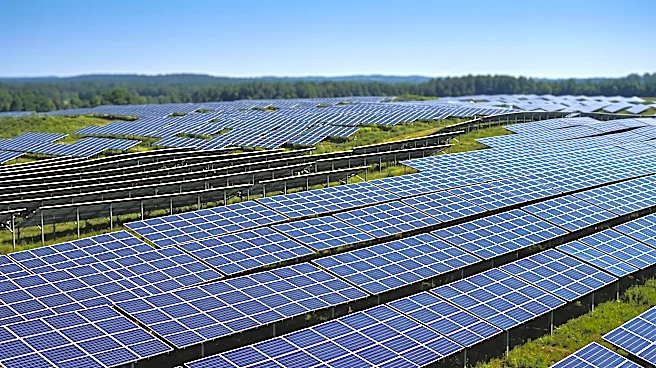
as he consults food systems experts to determine the feasibility of an animal-free food system. Zanders, who founded Kipster farms in the Netherlands after his previous large-scale operation failed, aims to provide the highest-welfare eggs possible while envisioning a future without animal exploitation. His Kipster model emphasizes sustainability, animal welfare, and transparency, utilizing waste streams for chicken feed and solar panels, resulting in a 23% lower carbon footprint than conventional eggs. Despite his efforts to improve animal conditions, the documentary confronts the inherent contradiction of animal farming, even under higher welfare standards, as the ultimate outcome for the animals remains the same.
Why It's Important?
This documentary highlights a critical debate within the U.S. and global food systems: the tension between current consumer demand for animal products and the growing ethical and environmental concerns associated with animal agriculture. Zanders' personal struggle as a vegan poultry farmer embodies the broader societal challenge of transitioning towards more sustainable and ethical food production. The film's exploration of Kipster's model offers a glimpse into potential interim solutions that prioritize animal welfare and environmental impact, even if they don't fully align with a completely animal-free vision. For U.S. consumers and policymakers, the documentary raises important questions about the true cost of food, the definition of 'humane' farming, and the long-term viability of current agricultural practices. It also underscores the influence of environmental activists and academics in shaping the discourse around food systems and sustainability.
What's Next?
The documentary is likely to spark further discussions among consumers, farmers, and policymakers about the future of animal agriculture. It may encourage more farmers to explore higher-welfare and sustainable practices, similar to Kipster's model, as a bridge towards a potentially animal-free future. For consumers, the film could influence purchasing decisions, increasing demand for ethically produced animal products or accelerating the shift towards plant-based alternatives. The film's insights into the logistical challenges of an animal-free system, such as fertilizing crops without animal manure, could also stimulate innovation in sustainable agriculture. Ultimately, 'The Vegan Poultry Farmer' contributes to the ongoing dialogue about food ethics, environmental sustainability, and the potential for systemic change in how food is produced and consumed.
Beyond the Headlines
The documentary delves into the profound ethical dilemma faced by individuals and societies grappling with the exploitation of animals for food. Zanders' internal conflict reflects a broader societal awakening to the sentience of animals and the environmental consequences of industrial agriculture. The film challenges the notion that 'higher welfare' farming fully resolves ethical concerns, as it still culminates in the slaughter of animals. This raises fundamental questions about the moral permissibility of using animals as commodities, regardless of their living conditions. The documentary also touches upon the interconnectedness of food systems with climate change, biodiversity loss, and resource allocation, suggesting that a truly sustainable future may necessitate a radical rethinking of our relationship with animals and the planet. It encourages viewers to consider the systemic changes required to achieve a food system that is both ethical and environmentally sound.