



What's Happening?
Asia's factory activity ended 2025 on a stronger note, with major tech-exporting economies like South Korea and Taiwan showing growth in December. This rebound is attributed to a surge in export orders and growing demand for artificial intelligence. In
contrast, the Eurozone's manufacturing sector continued to contract, with Germany recording the weakest performance. The HCOB Eurozone Manufacturing PMI fell to 48.8 in December, indicating a deeper contraction. Meanwhile, France showed a rare improvement, and the UK experienced its fastest growth in 15 months.
Why It's Important?
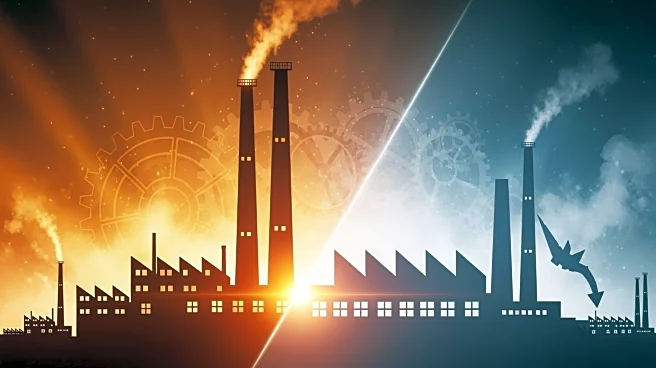
The contrasting trends between Asia and the Eurozone highlight shifting global economic dynamics. Asia's recovery is driven by strong demand for AI-related hardware and a shift in U.S. demand away from China. This growth benefits Asian economies, particularly those heavily involved in semiconductor manufacturing. Conversely, the Eurozone's contraction reflects challenges in demand for manufactured goods, impacting economic momentum. The situation underscores the importance of technological advancements and global trade patterns in shaping economic outcomes.
What's Next?
As Asia's manufacturing sector continues to benefit from global demand, the outlook remains favorable for export-oriented economies. However, the Eurozone faces challenges in reversing its contraction, with companies exercising caution. The ongoing demand for AI-related products suggests continued growth opportunities for Asian manufacturers. Monitoring developments in U.S. trade policies and global economic conditions will be crucial for both regions as they navigate these economic shifts.