



What's Happening?
The U.S. Food and Drug Administration (FDA) announced in February 2024 a market phase-out of grease-proofing substances containing PFAS (per- and polyfluoroalkyl substances) in paper and paperboard food packaging. However, this notice does not explicitly
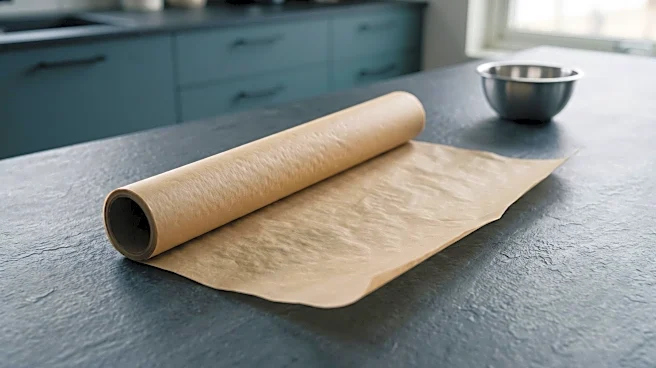
mention parchment or baking paper, leading to ongoing consumer questions about the safety of these products. While many parchment paper manufacturers state their products are silicone-coated, none of the Amazon listings checked explicitly claim to be PFAS-free. Independent spot checks, such as one commissioned by a consumer blog, found no detectable fluorine in brands like If You Care and Katbite, while regular white Reynolds and Costco's Kirkland showed low levels of total fluorine. The concern about dioxins in bleached paper, stemming from past pulp mill practices, has largely been addressed by EPA regulations in 1998, which significantly reduced dioxin levels in mill wastewater.
Why It's Important?
This development is important for U.S. consumers concerned about food safety and exposure to 'forever chemicals.' The FDA's action on PFAS in general food packaging highlights a broader regulatory effort to mitigate potential health risks associated with these substances. The ambiguity surrounding parchment paper, however, leaves consumers to navigate product claims and independent testing results to make informed choices. The presence of even low levels of total fluorine in some products, as indicated by spot checks, underscores the need for clearer labeling and potentially more comprehensive testing by manufacturers or regulatory bodies. For the food packaging industry, this situation emphasizes the ongoing challenge of developing and clearly communicating about safer alternatives, while for consumers, it necessitates a more vigilant approach to product selection, particularly for items used in food preparation.
What's Next?
Consumers will likely continue to seek out and prioritize parchment paper brands that explicitly state they are PFAS-free or have been independently verified to contain no detectable fluorine. Manufacturers may face increasing pressure to provide clearer labeling and more transparent information regarding the coatings and chemical composition of their parchment paper products. It is possible that the FDA or other regulatory bodies might eventually issue more specific guidance or regulations pertaining to PFAS in baking and parchment papers. In the interim, consumers are advised to look for products that name their coating (preferably silicone), are unbleached or chlorine-free, and clearly state a heat limit. The market may also see an increase in demand for reusable alternatives like silicone baking mats, which offer a PFAS-free option for many baking needs.
Beyond the Headlines
The discussion around PFAS in parchment paper extends beyond immediate health concerns, touching upon broader themes of consumer trust, corporate responsibility, and environmental impact. The lack of explicit PFAS-free labeling on many products, despite the FDA's broader regulatory actions, highlights a gap in consumer information and potentially in regulatory scope. This situation can erode consumer trust in product safety claims and place the burden of due diligence on individual buyers. Environmentally, the continued use of PFAS in any form contributes to persistent chemical pollution, as these 'forever chemicals' do not break down easily and can accumulate in the environment and human body. The shift towards unbleached and silicone-coated options, driven by consumer demand and independent testing, reflects a growing public awareness and preference for products with a lower environmental and health footprint, pushing manufacturers towards more sustainable and transparent practices.