




What's Happening?
The Russian Orthodox Church has dispatched relics of medieval Moscow Prince Dmitry Donskoy to Russian troops engaged in the conflict in Ukraine. This initiative aims to provide spiritual support and strengthen the morale of soldiers on the front lines.
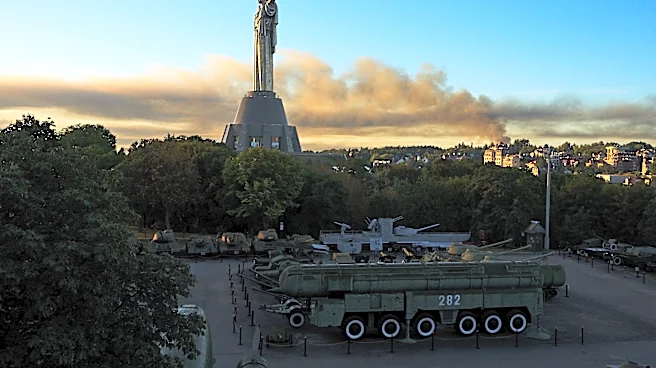
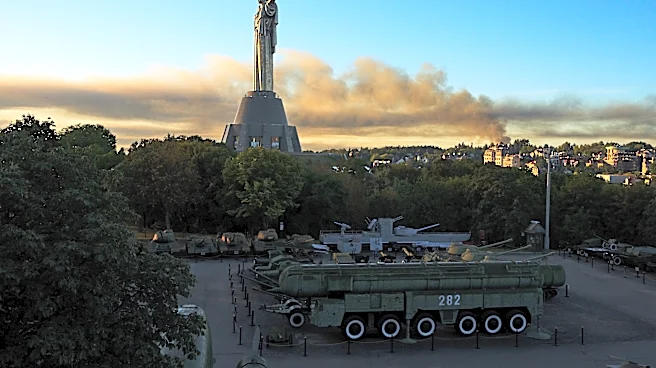
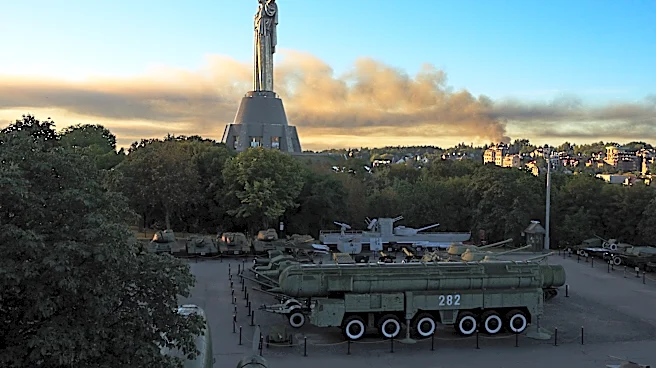
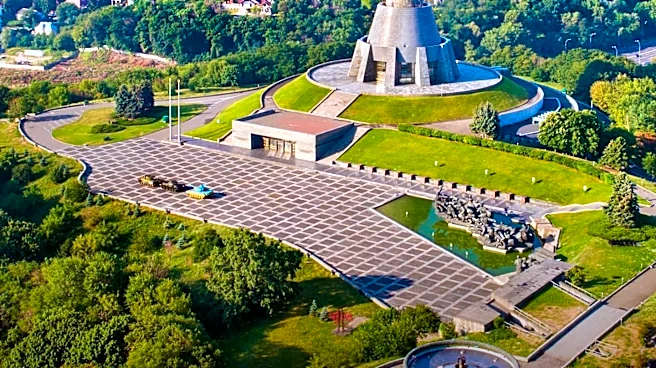
A reliquary containing a fragment of Prince Dmitry Donskoy's right hand was transported to a church at the Saur-Mohyla memorial complex in the temporarily occupied Donetsk region of Ukraine, where a prayer service was held before it was sent closer to the front. According to Russia's Defense Ministry, the relic is intended for the 'spiritual strengthening of warriors.' Metropolitan Vladimir of Donetsk and Mariupol stated that the arrival of the relics is meant to bolster Russian troops and civilians, mobilizing their efforts to 'achieve victory over the enemy.' Prince Dmitry Donskoy, canonized in 1988, is known for leading forces against the Golden Horde in the 14th century.
Why It's Important?
This action by the Russian Orthodox Church signifies a deeper integration of religious symbolism and historical narratives into Russia's military efforts in Ukraine. By invoking a figure like Prince Dmitry Donskoy, a revered military leader from Russian history, the Church aims to imbue the conflict with a sense of historical continuity, divine purpose, and national destiny. This move is crucial for bolstering morale among troops and the civilian population, framing the conflict not just as a geopolitical struggle but as a spiritual crusade. It also highlights the significant role the Russian Orthodox Church plays in supporting state policies and national identity. For soldiers on the front lines, such spiritual gestures can provide comfort, a sense of shared purpose, and reinforce their commitment to the cause, potentially influencing their psychological resilience and combat effectiveness.
What's Next?
The deployment of religious relics to the front lines is likely to continue as part of the Russian Orthodox Church's broader efforts to provide spiritual and moral support to troops. This initiative may see further integration of religious ceremonies and symbols into military life, aiming to sustain morale and reinforce the narrative of a righteous cause. The Church could expand these efforts by sending more clergy to the front, organizing additional prayer services, and distributing religious artifacts. This strategy is intended to foster a deeper sense of national and spiritual unity among soldiers and the wider Russian population. The impact on troop morale will be closely observed, as will any potential reactions from Ukrainian forces or international observers regarding the use of religious symbols in warfare.
Beyond the Headlines
The use of medieval relics in a modern conflict underscores the profound cultural and historical dimensions of the Russia-Ukraine war. It reflects a strategic effort to tap into deep-seated national and religious sentiments, drawing parallels between contemporary events and historical struggles for Russian identity and sovereignty. This practice blurs the lines between state, military, and religious institutions, suggesting a unified front where spiritual authority reinforces political and military objectives. Ethically, it raises questions about the instrumentalization of religion for wartime propaganda and the potential for exacerbating religious divisions. Culturally, it highlights the enduring power of historical narratives and religious symbols in shaping collective identity and motivating action, even in the 21st century, revealing a complex interplay of faith, history, and geopolitics.