



What's Happening?
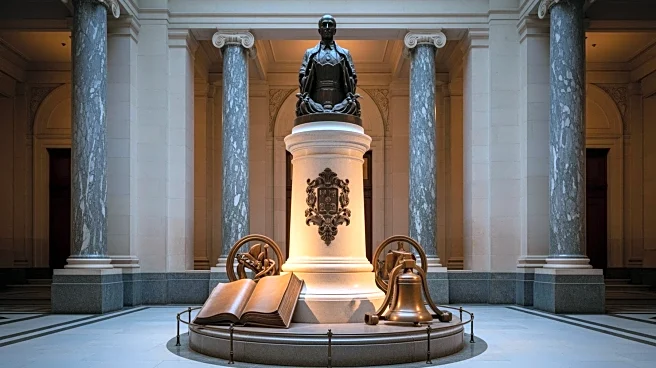
Barbara Rose Johns, a pivotal figure in the fight against school segregation, has been honored with a statue in the U.S. Capitol. In 1951, at the age of 16, Johns led a student walkout at the segregated Robert Russa Moton High School in Farmville, Virginia,
protesting the inferior conditions compared to the local white high school. This protest became one of the cases reviewed in the landmark Brown v. Board of Education Supreme Court decision, which declared school segregation unconstitutional in 1954. The statue, created by Maryland artist Steven Weitzman, depicts Johns at a podium, symbolizing her leadership and courage. It replaces a statue of Confederate General Robert E. Lee, removed in 2020 as part of a broader movement to eliminate Confederate symbols.
Why It's Important?
The installation of Barbara Rose Johns' statue in the U.S. Capitol is a significant acknowledgment of her contribution to civil rights and education equality in the United States. It represents a shift in how historical figures are commemorated, moving away from Confederate symbols to honor those who fought for justice and equality. This change reflects ongoing efforts to address historical inequities and promote a more inclusive narrative in American history. The statue serves as an educational tool, inspiring visitors, especially young people, to learn about and continue the fight for civil rights and equality.
What's Next?
The unveiling of Johns' statue is expected to be attended by state leaders and members of Congress, including House Speaker Mike Johnson and Virginia Governor Glenn Youngkin. This event may prompt further discussions on how historical figures are represented in public spaces and could influence future decisions regarding the removal or replacement of other controversial monuments. Additionally, it may inspire other states to reevaluate their own historical representations in the Capitol, potentially leading to more diverse and inclusive commemorations.
Beyond the Headlines
The decision to honor Barbara Rose Johns with a statue in the U.S. Capitol highlights the ongoing cultural and political debates surrounding historical memory and representation. It underscores the importance of recognizing individuals who have contributed to social progress and justice, challenging the traditional narratives that have often marginalized such figures. This development may encourage a broader reevaluation of how history is taught and remembered, promoting a more comprehensive understanding of the civil rights movement and its impact on American society.