







What's Happening?
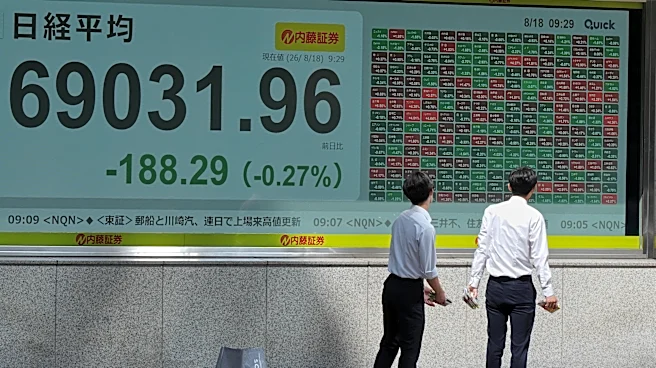
Japan's economy grew by 0.3% in the April to June period compared to the first quarter of the year, translating to an annualized pace of 1.1%. This growth rate fell below market expectations, marking the third consecutive quarter of economic expansion.
The primary factors contributing to this weaker-than-anticipated performance were identified as soft consumption and corporate investment. The data, released by the Japan Cabinet Office, indicates a slower economic trajectory than analysts had projected for the period.
Why It's Important?
While this news directly concerns Japan's economy, it holds significance for the U.S. due to the interconnectedness of global markets and trade relationships. A weaker Japanese economy could impact U.S. businesses operating in Japan or those with significant trade ties to the country. Reduced consumer spending and corporate investment in Japan might lead to decreased demand for U.S. exports or services. Furthermore, a slowdown in a major global economy like Japan can contribute to broader global economic uncertainties, potentially influencing investor sentiment and market stability in the U.S. The U.S. and Japan are key economic partners, and economic shifts in one nation often have ripple effects on the other, particularly in areas like technology, automotive, and financial services.
What's Next?
Following this weaker-than-expected growth, there may be increased scrutiny on Japan's economic policies and potential measures to stimulate consumption and corporate investment. The Bank of Japan (BOJ) might face renewed pressure regarding its monetary policy decisions, especially concerning interest rates, to counter the economic slowdown. Businesses with operations or investments in Japan will likely re-evaluate their strategies in light of these economic indicators. Future economic data releases, particularly those related to inflation and consumer spending, will be closely watched to determine if this trend of subdued growth persists or if there are signs of recovery. The Japanese government may also consider fiscal stimulus measures to bolster economic activity.
Beyond the Headlines
The persistent weakness in consumption and corporate investment in Japan highlights a broader challenge faced by developed economies: how to sustain growth in the face of demographic shifts and evolving global economic landscapes. This situation could prompt deeper discussions within Japan about structural reforms to encourage domestic demand and innovation. For the U.S., it underscores the importance of diversifying trade relationships and strengthening domestic economic resilience, as even major economic partners can experience unexpected slowdowns. The long-term implications could include a re-evaluation of global supply chains and investment strategies, as companies seek more stable and robust markets. This economic performance also raises questions about the effectiveness of current economic policies in stimulating sustainable growth in mature economies.