



What's Happening?
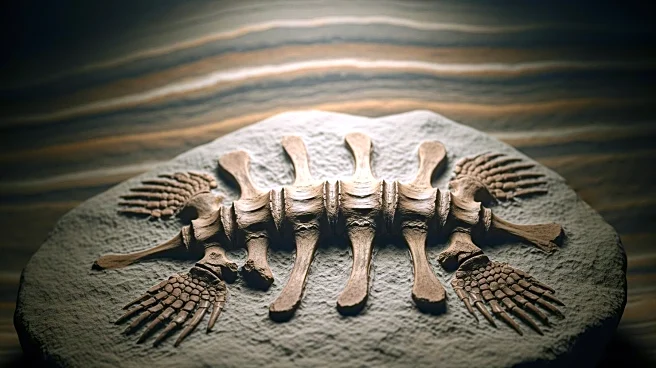
In northeastern Algeria, a groundbreaking discovery has been made with the unearthing of the first-ever plesiosaur fossil in the region. This significant find was made in 2025 at Djebel Essen, located in the Tébessa region, during a targeted paleontological
survey. The research, led by Dr. Mohammed Naimi and PhD student Sakina Nemouchi, focused on the Upper Coniacian Essen Formation. This discovery fills a crucial gap in the fossil record of North Africa, where plesiosaur remains have been notably absent. Plesiosaurs, known for their long necks and small heads, were prominent marine reptiles during the Mesozoic era. The fossil provides new insights into the distribution and diversity of these creatures during the Cretaceous period, a time marked by significant ecological changes in marine life.
Why It's Important?
The discovery of the plesiosaur fossil in Algeria is pivotal for understanding the marine ecosystems of the Cretaceous period. While plesiosaurs have been well-documented in other parts of the world, their presence in North Africa was previously unconfirmed. This find not only expands the known geographical distribution of plesiosaurs but also enhances our understanding of their diversity and adaptation. The fossil offers valuable information about the structure and characteristics of plesiosaurs, contributing to the broader knowledge of marine life during this era. This discovery underscores the importance of targeted paleontological research in uncovering hidden aspects of ancient ecosystems, potentially leading to further significant finds in the region.
What's Next?
The discovery at Djebel Essen opens new avenues for paleontological research in Algeria and the broader North African region. Future expeditions may uncover additional fossils, providing further insights into the marine life of the Cretaceous period. Researchers will likely continue to study the plesiosaur specimen to gain a deeper understanding of its anatomy and ecological role. This could lead to a reevaluation of the marine biodiversity and evolutionary history of the region during the Mesozoic era. The findings may also prompt similar targeted surveys in other underexplored areas, potentially leading to more groundbreaking discoveries.