



What's Happening?
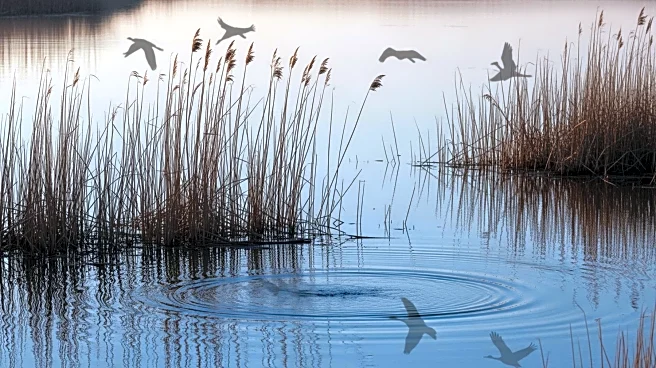
Sandhill cranes, traditionally seen in the Jasper-Pulaski Fish and Wildlife Area, are now increasingly visiting the Great Marsh at Indiana Dunes National Park. According to Katie Hobgood, Program Director of Save the Dunes, this shift is part of a broader
trend of rising sandhill crane populations, which had previously been at low numbers. The Great Marsh, once a vast 4,000-acre wetland, has undergone significant restoration efforts since 1998, led by the National Park Service and partners. These efforts have included the removal of invasive species and the planting of over 734,000 native plants, supported by the Great Lakes Restoration Initiative. The restoration has revitalized the marsh, making it an attractive stopover for the migrating cranes.
Why It's Important?
The resurgence of sandhill cranes at the Great Marsh highlights the success of long-term ecological restoration efforts. This development is significant for conservationists and environmentalists, as it demonstrates the positive impact of sustained restoration projects on wildlife habitats. The increased presence of these birds can boost eco-tourism, drawing bird watchers and nature enthusiasts to the area, which can have economic benefits for local communities. Additionally, the success story of the Great Marsh can serve as a model for other restoration projects, emphasizing the importance of funding and community involvement in ecological conservation.
What's Next?
Continued monitoring and maintenance of the Great Marsh will be crucial to ensure the habitat remains conducive for sandhill cranes and other wildlife. The success of the restoration efforts may encourage further investment in similar projects across the region. Local authorities and conservation groups might also focus on promoting eco-tourism, leveraging the presence of the cranes to attract visitors. Ongoing advocacy for funding through initiatives like the Great Lakes Restoration Initiative will be essential to sustain and expand these efforts.
Beyond the Headlines
The restoration of the Great Marsh not only benefits wildlife but also contributes to broader environmental health, including water quality and flood control. The project underscores the interconnectedness of ecosystems and the role of wetlands in supporting biodiversity. It also highlights the challenges posed by invasive species and the need for ongoing management to preserve native habitats. The success of the Great Marsh could inspire a cultural shift towards valuing and investing in natural landscapes as vital components of regional identity and heritage.