
What's Happening?
A new model developed by Washington state experts indicates that a massive 9.2 magnitude earthquake off the coast of Alaska could generate a tsunami capable of reaching Puget Sound. The model, based in part on a deadly 1964 earthquake that sent a tsunami to Washington State,
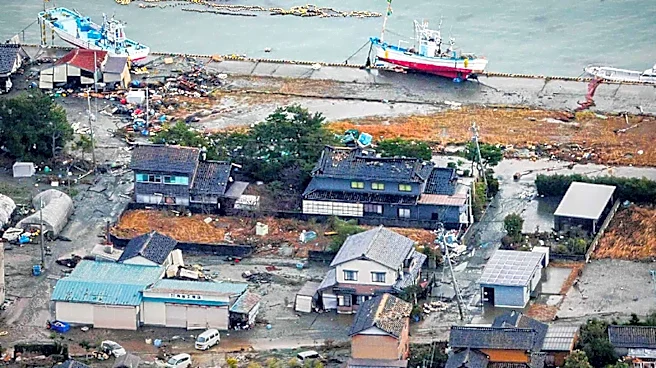
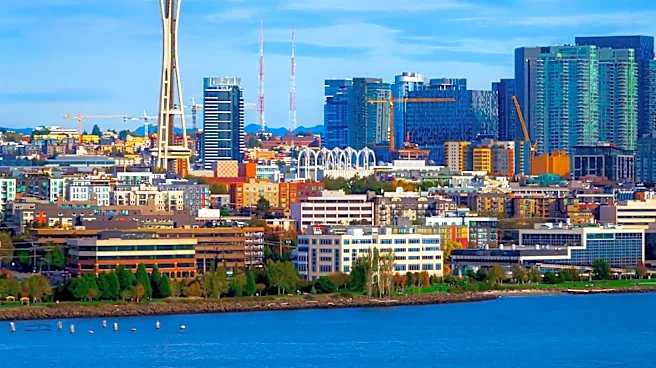
illustrates how a powerful earthquake along the Alaska-Aleutian subduction zone would push high waves down Washington’s coast and into Puget Sound. According to the project summary, water levels could rise by two feet in Seattle, four feet in Olympia, and as high as 24 feet at Westport along the coast. Elyssa Tappero, Tsunami Program Manager with the Washington State Emergency Management Division, emphasized that this distant event would be experienced across all of Washington. Harold Tobin, Director of the Pacific NW Seismic Network, explained that tsunamis are generated when underwater earthquakes suddenly lift the seabed, pushing water upwards and creating waves that disperse across the ocean.
Why It's Important?
This new model is crucial for enhancing disaster preparedness and public safety in Washington state. While much attention is often given to the Cascadia Subduction Zone, this research highlights the significant threat posed by distant tsunamis originating from other parts of the Pacific Ocean, which occur more frequently. The potential for a 24-foot wave at Westport and significant water level rises in major urban centers like Seattle and Olympia underscores the need for robust evacuation plans and early warning systems. The model provides critical data for emergency management agencies to refine their response strategies, allocate resources, and educate the public on necessary actions during a tsunami event. Understanding these diverse seismic threats is vital for protecting coastal communities, infrastructure, and the economy of the Pacific Northwest.
What's Next?
The new state model provides valuable information that will be integrated into Washington's emergency preparedness and response protocols. In the scenario presented, the first high waves are estimated to reach the Washington Coast approximately 3.5 hours after the earthquake, providing a critical window for evacuation. The state currently has 122 tsunami sirens located in coastal and vulnerable areas, which would be activated. Additionally, tsunami warnings would be disseminated via smartphones through the same system used for Amber Alerts. Future efforts will likely focus on public education campaigns to ensure residents understand the warning signs and evacuation routes, as well as continued refinement of the model and warning systems. The goal is to maximize the effectiveness of early warnings and ensure timely evacuations to minimize loss of life and property.
Beyond the Headlines
The threat of a distant tsunami reaching Puget Sound from an Alaskan earthquake brings to light the complex geological interconnectedness of the Pacific Rim and the far-reaching consequences of seismic activity. Beyond immediate safety concerns, such an event could have profound long-term impacts on coastal ecosystems, infrastructure, and the regional economy. The model prompts a deeper consideration of resilient urban planning, including the design of coastal defenses and the strategic placement of critical facilities. Ethically, it underscores the responsibility of government agencies to transparently communicate risks and empower communities with the knowledge and tools to protect themselves. Culturally, it reinforces the historical awareness of natural hazards in the Pacific Northwest, encouraging a proactive stance towards living in a seismically active region and fostering a collective sense of preparedness and community resilience.