
What's Happening?
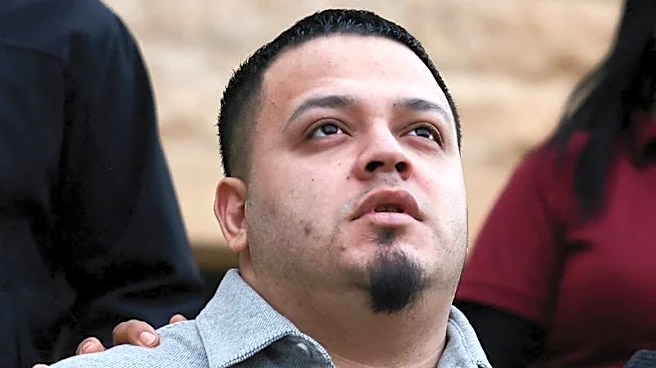
A federal judge in Nashville has dismissed human smuggling charges against Kilmar Abrego García, a Salvadoran immigrant previously deported by the Trump administration. The charges were related to a 2022
traffic stop in Tennessee, where Abrego García was found driving an SUV with nine other men. Prosecutors alleged that he was paid to transport individuals who had crossed the border into Texas. However, the judge found a presumption of vindictive prosecution, noting the charges were filed nearly two and a half years after the incident, coinciding with the Trump administration's obligation to return Abrego García to the U.S. following a Supreme Court order. The case had become a priority for the Department of Justice, despite internal opposition, leading to the resignation of a prosecutor in protest.
Why It's Important?
This ruling highlights the ongoing tensions between immigration enforcement and judicial oversight in the U.S. The dismissal of charges against Abrego García underscores concerns about the use of prosecutorial power for political purposes, particularly in cases involving immigration policy. The decision may influence future cases where prosecutorial motives are questioned, potentially impacting how immigration laws are enforced and challenged in court. The case also reflects broader debates over the Trump administration's immigration policies and their legal ramifications, affecting both the immigrant community and the legal system's approach to such cases.
What's Next?
The Department of Justice plans to appeal the ruling, indicating that the legal battle over Abrego García's case is not yet over. Meanwhile, Abrego García faces a separate immigration case that will determine his deportation status. The outcome of these proceedings could set precedents for how similar cases are handled in the future, particularly those involving claims of vindictive prosecution. The Department of Homeland Security's response, labeling the decision as 'naked judicial activism,' suggests potential further legal and political challenges.