






What's Happening?
The 31st Conference of the Parties (COP31) is set to focus on climate action concerning agriculture and food security, with a critical decision pending on the future of the Sharm el-Sheikh Joint Work on Implementation of Climate Action on Agriculture
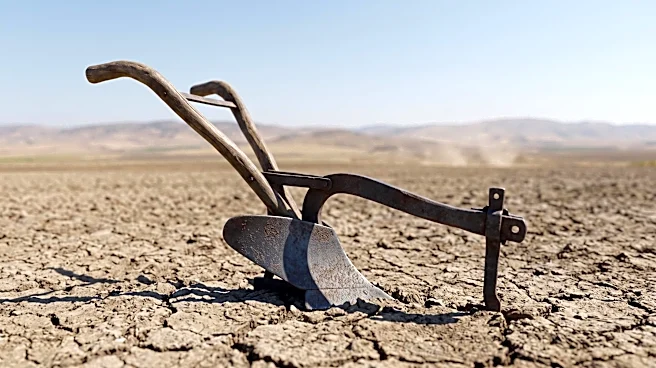
and Food Security (SJWA). The SJWA's mandate concludes at COP31, where parties are expected to report on its progress and outcomes. Climate change, conflict, and water scarcity are significantly threatening global agriculture and food security. Agricultural production is highly vulnerable to climate impacts like droughts, floods, and extreme heat, while also contributing up to 40% of global methane emissions. The COP31 President-Designate has prioritized supporting food security and developing sustainable agricultural systems, planning high-level dialogues on women and youth in farming.
Why It's Important?
The discussions at COP31 are crucial for global food systems and climate mitigation efforts. Agriculture's dual role as both a victim and contributor to climate change necessitates integrated solutions. The decision on the SJWA's future will determine the framework for international cooperation on climate-resilient food systems. A strong outcome could lead to enhanced support for sustainable agricultural practices, safeguarding food security for millions and contributing to the goals of the Paris Agreement. Conversely, a failure to agree on a robust successor program could leave agriculture vulnerable to escalating climate impacts and hinder efforts to reduce greenhouse gas emissions from the sector. The emphasis on women and youth in farming highlights the recognition of their vital, yet often overlooked, roles in food production and climate adaptation.
What's Next?
At COP31, parties have several key opportunities: agreeing on the future of the SJWA, reviewing its progress and outcomes, and using the COP31 Action Agenda to elevate food security and sustainable agriculture as political priorities. Options for the SJWA include extending its current mandate to COP32 (2027) or COP33 (2028) to allow more time for negotiations, or launching a new work program with an expanded scope to include the broader concept of 'food systems.' Intersessional work, possibly at regional climate weeks, is suggested to advance climate action on agriculture and food security. The decisions made at COP31 will significantly shape the trajectory of climate action in agriculture under the UNFCCC for years to come.
Beyond the Headlines
The debate over extending the SJWA versus creating a new 'food system' work program at COP31 reflects a deeper tension between focused, actionable initiatives and broader, more complex approaches. While a 'food system' approach could offer a more holistic view, it also risks diluting efforts by encompassing too many sectors. The inclusion of women and youth in farming dialogues points to the social equity dimensions of climate action, recognizing that vulnerable groups are often disproportionately affected by climate change and hold valuable traditional knowledge. The outcomes of COP31 will not only influence agricultural policies but also have ripple effects on global trade, economic stability, and the livelihoods of farming communities worldwide, underscoring the intricate link between environmental policy and socio-economic development.