







What's Happening?
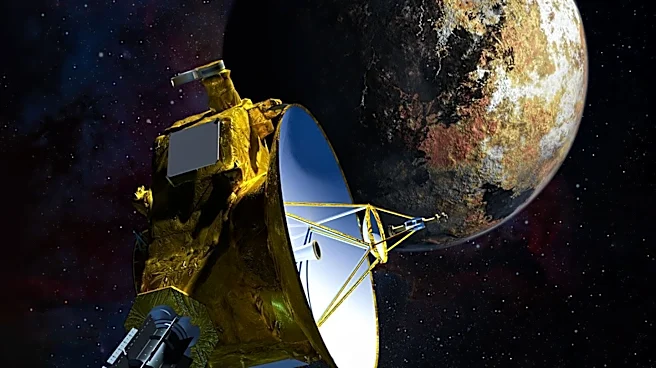
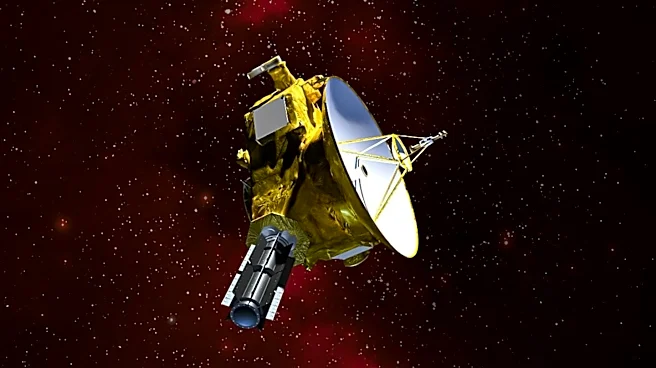
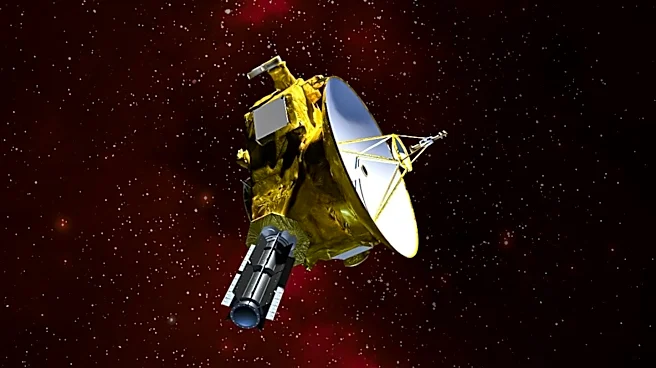
NASA's New Horizons spacecraft has awakened from a 321-day hibernation as it approaches the edge of the solar system's heliosphere. This region, known as the 'termination shock,' is where the solar wind slows down as it meets interstellar wind. New Horizons,
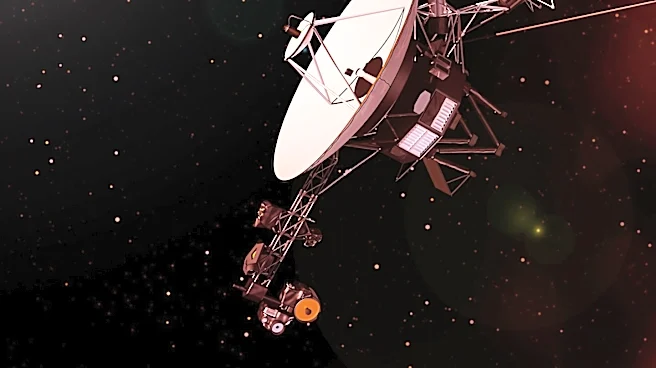
currently 5.9 billion miles from Earth, is set to provide valuable data as it crosses this boundary, which is expected to occur between 2029 and 2040. The spacecraft's journey through the Kuiper Belt and its sophisticated instruments offer a unique opportunity to study the outer limits of the sun's influence, a task previously undertaken by the Voyager spacecraft.
Why It's Important?
The data collected by New Horizons will enhance our understanding of the heliosphere's dynamics and the transition to interstellar space. This information is crucial for future interstellar missions and for understanding the protective role of the heliosphere against cosmic radiation. The mission builds on the legacy of the Voyager spacecraft, offering more advanced scientific capabilities. Insights gained from New Horizons could inform the design of future spacecraft and missions aimed at exploring beyond our solar system, potentially leading to groundbreaking discoveries about the universe.
What's Next?
As New Horizons continues its journey, scientists will analyze the data to refine models of the heliosphere and its interactions with interstellar space. The spacecraft's findings will contribute to planning future missions that aim to explore the boundaries of our solar system and beyond. The mission's success could pave the way for more ambitious interstellar exploration projects, expanding our knowledge of the cosmos and our place within it.