







What's Happening?
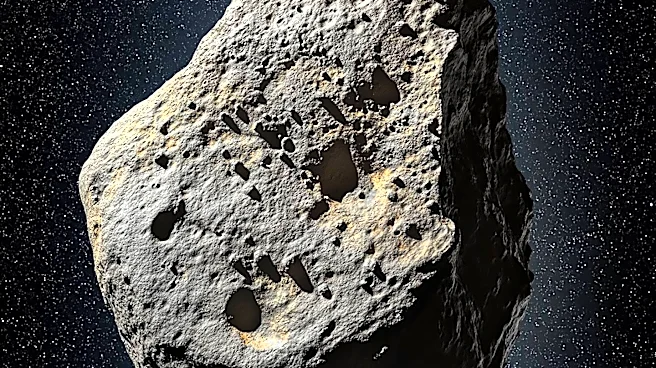
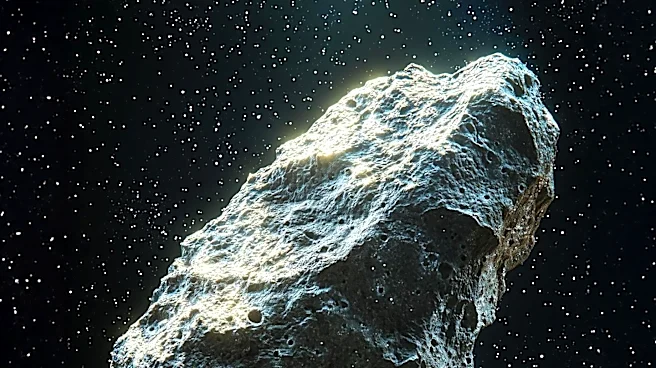
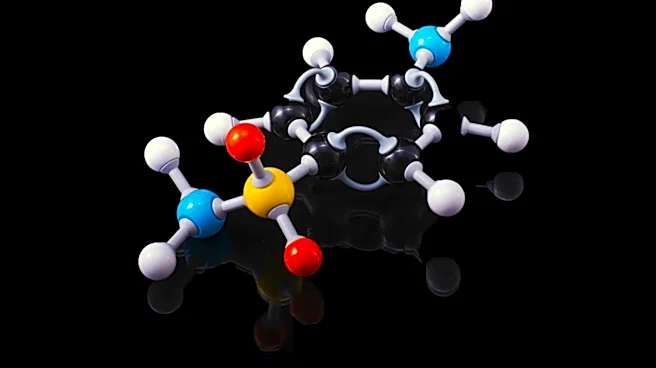
Meteorite fragments recovered from a New Jersey home in 2024 have been revealed to contain prebiotic molecules and other 'building blocks of life'. The findings, published by researchers at the SETI Institute, highlight the meteorite's composition of carbonaceous
chondrite, a rare material. The fragments, initially kept quiet, were discovered after the meteorite crashed through a Hillsborough home's roof, emitting a sulfur-like odor and scattering black debris. The study indicates the fragments were covered in concentrated salty fluids, or brine, suggesting a complex chemical environment. This meteorite is considered one of the most scientifically valuable ever recovered, with some fragments destined for the American Museum of Natural History.
Why It's Important?
The discovery of prebiotic molecules in the New Jersey meteorite provides crucial insights into the chemistry of early life on Earth. These findings could enhance our understanding of how life originated, offering clues about the conditions necessary for life to develop. The presence of prebiotic molecules in meteorites supports theories that life's building blocks may have been delivered to Earth from space, influencing the planet's biological evolution. This research could impact astrobiology and the search for life beyond Earth, as similar chemical processes might occur on other planets or celestial bodies.
What's Next?
The fragments will be studied further to understand their chemical composition and potential implications for the origin of life. Researchers may explore other meteorites for similar prebiotic molecules, expanding the knowledge of extraterrestrial chemistry. The findings could lead to collaborations between institutions to study the meteorite's properties and their relevance to astrobiology. As the fragments are displayed at the American Museum of Natural History, they will likely attract public interest and further scientific inquiry into the origins of life.