





What's Happening?
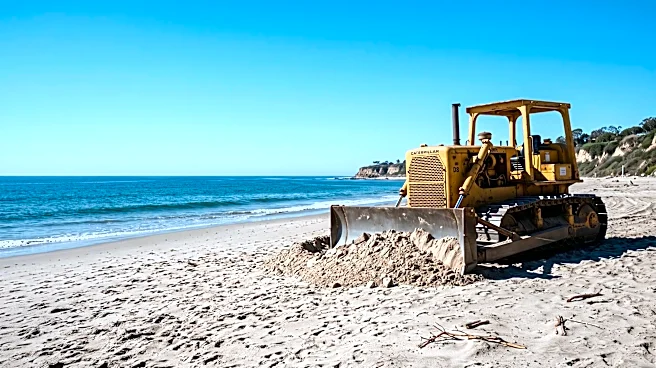
Mark Attanasio, owner of MLB's Milwaukee Brewers, has been penalized $2 million by the California Coastal Commission for illegally removing sand and boulders from a public beach in Malibu. The work, conducted by Attanasio’s company, 2XMD Partners LLC,
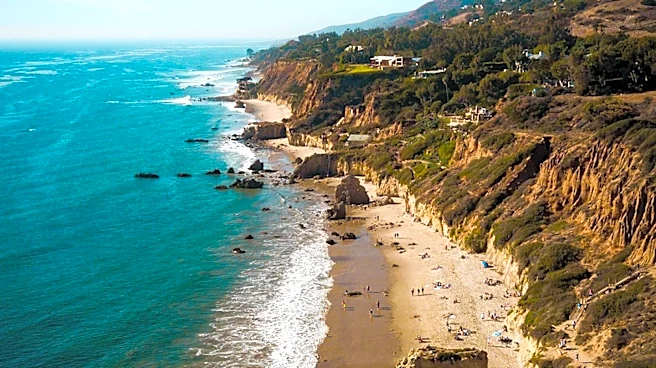
involved using excavators and other heavy equipment to shore up his beachfront property near Lechuza Point, north of Point Dume. This activity was carried out without the necessary permits. Additionally, 2XMD Partners LLC erected an unpermitted private beach stairway and a revetment in a public access area to facilitate the movement of work equipment to the shoreline. As part of the settlement, Attanasio has agreed to remove all unpermitted structures, restore the damaged boulder field, and transfer a $2 million piece of undeveloped beachfront land near Big Rock Beach to public ownership at no cost. The California Coastal Commission highlighted that this agreement represents a significant victory for public access to the coast.
Why It's Important?
This penalty underscores the stringent environmental regulations governing California's coastline and the state's commitment to preserving public access to its beaches. The California Coastal Commission's action against a high-profile individual like Mark Attanasio sends a clear message that environmental laws and permitting processes must be respected, regardless of an individual's status or wealth. The transfer of the $2 million beachfront property to public ownership will enhance recreational opportunities and protect ecological habitats, as the area is home to over 1,000 species of algae and invertebrates. This case sets a precedent for how coastal violations are addressed, potentially deterring future unauthorized development and ensuring that valuable coastal resources remain accessible to all Californians, rather than being privatized or altered for individual gain.
What's Next?
Following the settlement, Mark Attanasio is expected to proceed with the removal of the unpermitted structures and the restoration of the damaged boulder field as agreed with the California Coastal Commission. The transfer of the $2 million beachfront property near Big Rock Beach to public ownership will also be finalized, expanding public access along a coastline where such access is limited. The California Coastal Commission will likely monitor these actions to ensure full compliance with the settlement terms. This case may also lead to increased scrutiny of other beachfront properties in Malibu and along the California coast, potentially prompting further enforcement actions against unpermitted alterations or developments. The public can anticipate new access points and restored natural habitats as a direct result of this agreement.
Beyond the Headlines
This incident highlights the ongoing tension between private property rights and public access along California's valuable coastline. The California Coastal Commission's firm stance in this case reinforces the principle that the state's beaches are a public trust, not private extensions of adjacent properties. The ecological impact of such unauthorized alterations, even seemingly minor ones, can be significant, affecting delicate ecosystems that support diverse marine life. The settlement also brings to light the broader issue of environmental justice, ensuring that coastal resources are not exclusively enjoyed by a privileged few but are preserved and accessible for the benefit of all citizens. This case serves as a reminder of the continuous effort required to balance development with conservation and public interest in environmentally sensitive areas.