




What's Happening?
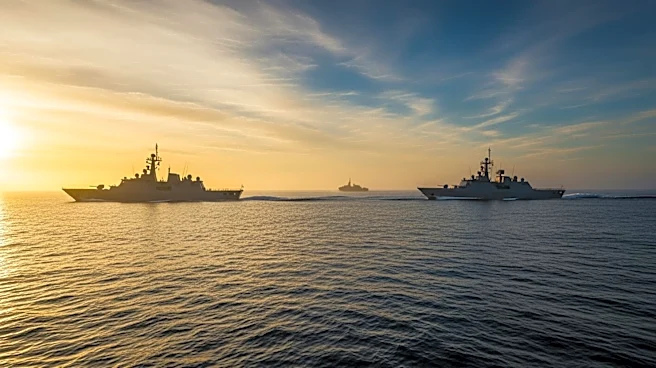
India has commissioned two significant naval vessels, INS Aridhaman and INS Taragiri, marking a substantial step towards maritime self-reliance. INS Aridhaman is the third indigenous nuclear-powered ballistic missile submarine, enhancing India's nuclear triad
with its advanced capabilities, including eight vertical launch systems capable of launching multiple ballistic missile types. INS Taragiri, a guided missile frigate, represents a shift towards high-end naval warfare, equipped with an Integrated Combat Management System. These developments come amid increasing militarization in the Indo-Pacific region, particularly with China's expanding naval presence. The vessels, built with significant indigenous technology, symbolize India's growing self-reliance in defense manufacturing.
Why It's Important?
The commissioning of these vessels is crucial for India's strategic positioning in the Indo-Pacific, a region experiencing heightened geopolitical tensions. By enhancing its naval capabilities, India aims to maintain a balance of power and deter potential conflicts without escalating tensions. The involvement of over 200 MSMEs in the construction of these vessels highlights the growth of India's domestic defense industry, supporting thousands of jobs and reducing reliance on foreign arms. This move not only strengthens India's defense capabilities but also boosts its economic and technological self-sufficiency.
What's Next?
As India continues to enhance its naval capabilities, further developments in indigenous defense technology are expected. The ongoing construction of a fourth submarine, INS Arisudan, and its sea trials indicate continued progress in India's naval expansion. The strategic focus will likely remain on countering regional threats and maintaining a credible deterrence posture. The geopolitical dynamics in the Indo-Pacific will continue to influence India's defense strategies, with potential implications for regional security and international relations.