







What's Happening?
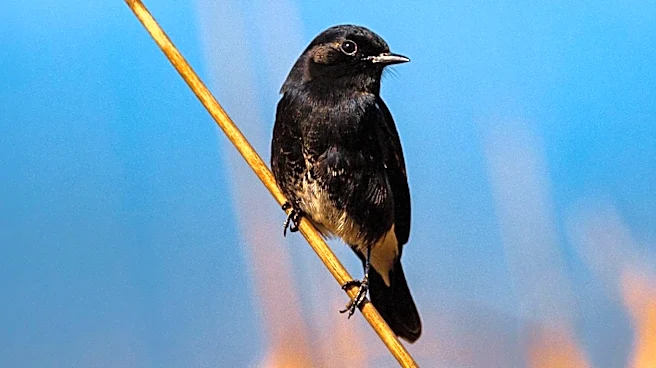
The blackbird population in south-east England and Greater London is facing a significant threat from the Usutu virus, a disease that originated in Africa and was first detected in Britain in 2020. The spread of this virus is believed to be exacerbated
by climate change, which has facilitated its geographical expansion. The Usutu virus is part of a broader pattern of emerging threats to bird species in the region, which have not previously been at high risk of population declines. In addition to the Usutu virus, garden bird trichomonosis, caused by a parasite, is affecting greenfinches and is beginning to spread to chaffinches. Bird conservation organizations, including the RSPB, are advising against feeding birds from May to October to help curb the spread of these diseases, as garden feeders can act as super-spreaders.
Why It's Important?
The decline in bird populations, particularly those like the blackbird, which are iconic to the British landscape, signals broader environmental issues. Birds are often indicators of the health of ecosystems, and their decline suggests significant ecological disruptions. The spread of the Usutu virus and other diseases highlights the impact of climate change on wildlife, as changing temperatures and weather patterns can facilitate the spread of pathogens. This situation underscores the need for increased conservation efforts and public awareness to protect these species and maintain biodiversity. The loss of bird populations also affects cultural and natural heritage, as birdsong is a cherished aspect of the natural environment in Britain.
What's Next?
Efforts to mitigate the spread of the Usutu virus and other diseases will likely involve increased monitoring and research to understand the dynamics of these pathogens. Conservation groups may intensify campaigns to educate the public on best practices for feeding and interacting with wild birds. Additionally, there may be calls for policy changes to address the underlying factors contributing to climate change and habitat loss, which are exacerbating these threats. The situation may also prompt further studies into the resilience of bird populations and the development of strategies to enhance their survival in changing environments.
Beyond the Headlines
The decline in bird populations due to diseases like the Usutu virus raises ethical questions about human responsibility in environmental stewardship. It highlights the interconnectedness of global ecosystems and the unintended consequences of human actions, such as climate change, on wildlife. This situation may lead to a reevaluation of conservation priorities and strategies, emphasizing the need for a holistic approach that considers the health of entire ecosystems rather than individual species. The cultural significance of birds and their songs also points to the importance of preserving natural soundscapes as part of cultural heritage.