
What's Happening?
Kazakhstan's energy ministry has confirmed that oil shipments via the Caspian Pipeline Consortium (CPC) remain stable despite recent reports of attacks on loading facilities in the Black Sea. The Russian
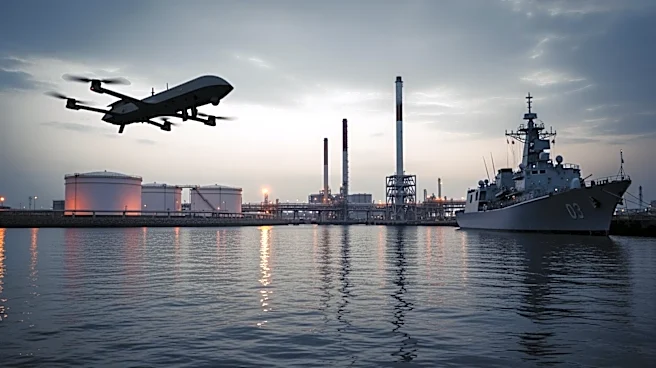
military accused Ukraine of damaging facilities at the maritime transshipment complex in Novorossiysk, which led to fires at four oil product reservoirs. Despite these incidents, Kazakhstan's deputy energy minister, Sungat Yesimkhanov, assured that the oil sector's operations are stable. The CPC terminal, crucial for Kazakhstan's crude exports, handles 80% of the country's oil shipments. Last year, the pipeline's supply volumes increased to 70.5 million metric tons, equivalent to 1.53 million barrels per day. The CPC is partly owned by U.S. companies Chevron and Exxon Mobil.
Why It's Important?
The stability of CPC oil exports is significant given the geopolitical tensions in the region, particularly between Russia and Ukraine. The Black Sea is a critical route for oil exports, and any disruption could have substantial implications for global oil markets. The involvement of major U.S. companies like Chevron and Exxon Mobil underscores the international stakes in maintaining stable operations. The situation highlights the vulnerability of energy infrastructure to geopolitical conflicts, which can lead to fluctuations in global oil prices and impact energy security. The continued stability of CPC exports helps mitigate potential supply disruptions and supports the global oil supply chain.
What's Next?
Future developments will likely focus on the geopolitical dynamics between Russia and Ukraine, as further escalations could threaten the stability of oil exports in the region. Stakeholders, including international oil companies and governments, will be monitoring the situation closely. Any significant disruption could prompt strategic responses, such as seeking alternative routes or increasing security measures around critical infrastructure. Additionally, diplomatic efforts may intensify to prevent further conflicts that could impact energy supplies.
Beyond the Headlines
The situation underscores the broader implications of geopolitical conflicts on global energy markets. It raises questions about the security of energy infrastructure and the need for diversified supply routes to mitigate risks. The involvement of major international companies in the CPC highlights the interconnectedness of global energy markets and the potential for regional conflicts to have far-reaching economic impacts. This scenario also emphasizes the importance of international cooperation in ensuring energy security and stability.