











What's Happening?
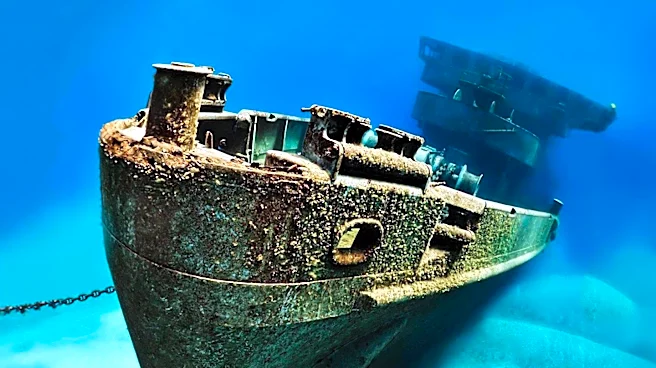
The wreck of the Soviet nuclear submarine Komsomolets, which sank in 1989 off the Norwegian coast, continues to pose a significant environmental threat. The submarine, which was designed with advanced Soviet technology, sank after a fire broke out, resulting
in the loss of 42 crew members. The wreck contains nuclear torpedoes, and recent research by Russian oceanographers has revealed that parts of the submarine's hull have deteriorated, increasing the risk of radioactive contamination. The Komsomolets was initially intended to be a formidable weapon capable of launching nuclear missiles from great depths, but it is now considered a technical and scientific disaster.
Why It's Important?
The potential for radioactive contamination from the Komsomolets wreck is a major environmental concern, particularly for the marine ecosystem in the Norwegian Sea. The presence of nuclear materials in the wreck poses a risk not only to marine life but also to human populations that rely on these waters for fishing and other activities. The situation underscores the long-term environmental and safety challenges associated with sunken nuclear vessels. It also highlights the need for international cooperation in addressing the risks posed by such wrecks, as the consequences of inaction could be severe and widespread.
What's Next?
Efforts to mitigate the risks associated with the Komsomolets wreck may involve international collaboration to safely contain or remove the nuclear materials. Environmental organizations and governments may push for increased monitoring and research to assess the current state of the wreck and its potential impact. Diplomatic discussions between Russia and Norway could lead to joint initiatives aimed at addressing the environmental threat. The situation may also prompt broader discussions on the management of other sunken nuclear vessels around the world.