









What's Happening?
The Trump administration is leveraging federal homeland security funds to compel states to implement significant election changes. This initiative is part of President Trump's broader campaign to address alleged voter fraud and increase federal oversight
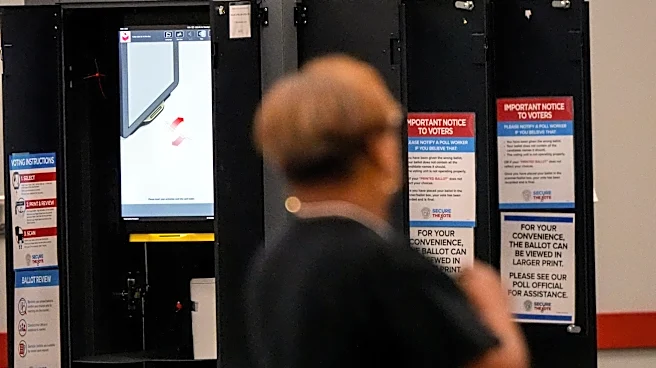
of state-run elections. The administration plans to withhold millions in homeland security grants unless states comply with new mandates, which include phasing out certain electronic voting systems in favor of hand-marked paper ballots and verifying voter rolls through a controversial federal database. These grants, which are crucial for states to prevent terrorism and prepare for disasters, are now tied to compliance with these election reforms. The move has sparked legal concerns, as the Constitution grants states the primary authority over election administration, and previous attempts by the administration to unilaterally change election rules have faced legal challenges.
Why It's Important?
This development is significant as it highlights the ongoing tension between federal and state control over election processes. By tying homeland security funds to election reforms, the Trump administration is exerting pressure on states to align with its policy goals, potentially impacting the integrity and independence of state-run elections. The financial implications are substantial, as states risk losing critical funding for security and disaster preparedness if they do not comply. This approach could set a precedent for future administrations to use federal funding as leverage to influence state policies, raising concerns about the balance of power between federal and state governments. Additionally, the requirement to use a federal database for voter verification has been criticized for its potential to produce false matches, which could disenfranchise eligible voters.
What's Next?
The proposed changes are likely to face legal challenges, as experts predict that courts may block the new requirements. States that oppose the mandates may seek judicial intervention to prevent the loss of federal funds. The administration's plan to enforce these changes could lead to a protracted legal battle over the extent of federal authority in state election administration. Meanwhile, states will need to assess the financial and logistical implications of complying with the new rules, including the potential costs of upgrading election equipment. The outcome of these legal and political battles will have significant implications for the future of election administration in the United States.