






What's Happening?
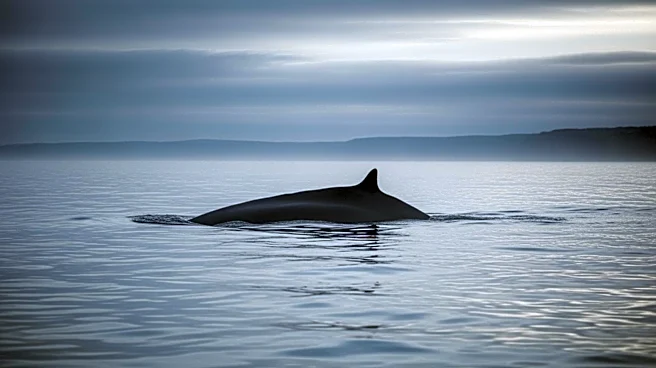
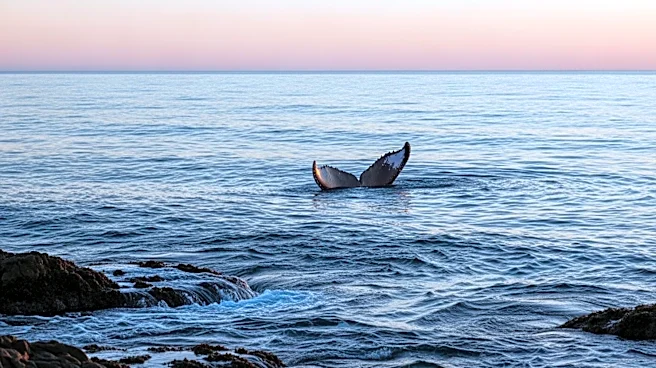
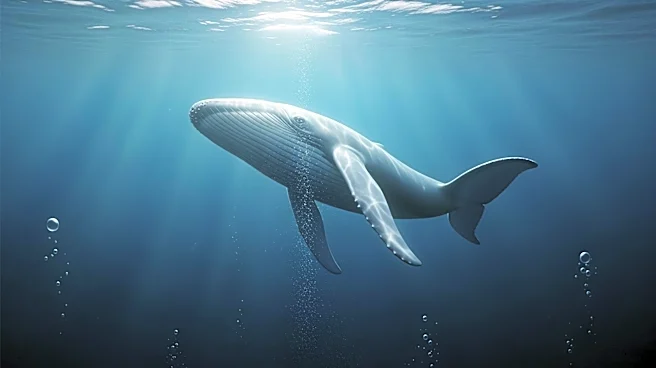
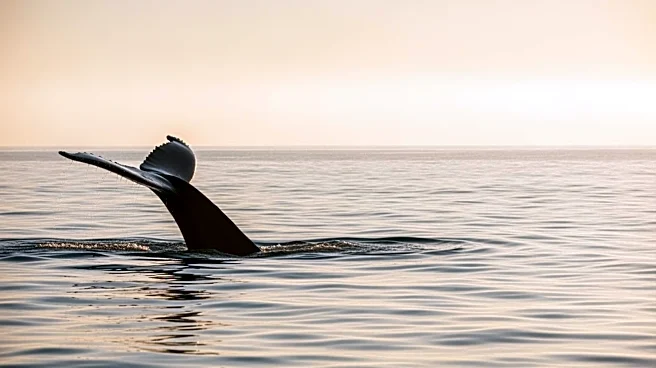
Authorities in Denmark have confirmed the death of a humpback whale known as 'Timmy' after its carcass was found stranded off a Danish island. The confirmation was made possible through a GPS transmitter found on the whale, which had been previously sighted
in the Baltic Sea and later stranded off the German coast. The Danish Environmental Protection Agency, along with Mecklenburg-Western Pomerania’s Environment Minister Till Backhaus, verified the whale's identity. Timmy had been released two weeks prior following a controversial rescue operation after repeatedly becoming stranded along Germany’s Baltic Sea coast. The whale was first spotted off the German coast on March 3, and its presence in the Baltic Sea, a region not typical for its species, remains unexplained. Marine experts speculate that the whale may have become disoriented while following shoals of herring or during migration.
Why It's Important?
The death of Timmy the humpback whale highlights the challenges faced by marine life in navigating increasingly complex and human-impacted environments. The incident underscores the importance of marine conservation efforts and the need for better understanding of whale migration patterns, especially in regions like the Baltic Sea that are not typical habitats for such species. The situation also raises questions about the effectiveness and ethical considerations of rescue operations for large marine animals. The use of technology, such as GPS tracking, plays a crucial role in monitoring and studying marine life, providing valuable data that can inform conservation strategies. This event may prompt further discussions on how to protect marine biodiversity in the face of environmental changes and human activities.
What's Next?
In the wake of Timmy's death, there may be increased efforts to study the factors leading to the whale's disorientation and stranding. Marine biologists and conservationists might push for more comprehensive tracking and monitoring systems to prevent similar incidents. Additionally, there could be calls for international cooperation in marine conservation, particularly in regions like the Baltic Sea where unusual marine activity is observed. The incident may also lead to a review of current rescue protocols to ensure they are both effective and humane. Stakeholders, including environmental agencies and marine research institutions, are likely to engage in discussions to enhance the protection of marine species and their habitats.