




What's Happening?
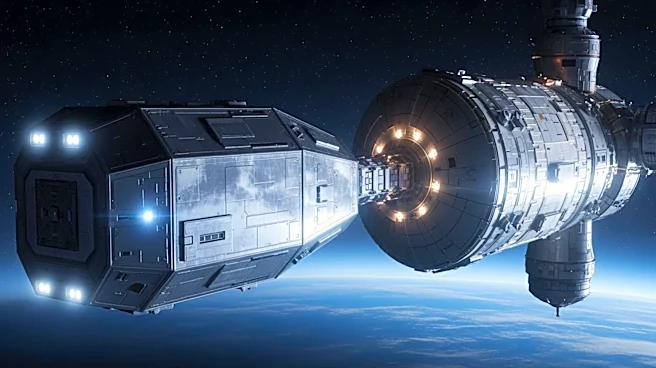
The Progress 95 cargo craft, operated by Roscosmos, is on course for an autonomous docking with the International Space Station (ISS). The spacecraft launched from the Baikonur Cosmodrome in Kazakhstan on April 25, 2026, at 6:21 p.m. EDT. It is scheduled
to dock at the aft port of the ISS's Zvezda module at 8 p.m. EDT. NASA is providing live coverage of the event through various platforms, including NASA+, Amazon Prime, and YouTube. The docking is part of routine resupply missions that deliver essential goods and equipment to the ISS, supporting ongoing scientific research and operations.
Why It's Important?
The docking of Progress 95 is crucial for maintaining the continuous operation of the International Space Station. These resupply missions ensure that astronauts have the necessary resources to conduct scientific experiments and maintain the station's infrastructure. The successful docking of cargo crafts like Progress 95 supports international collaboration in space exploration, involving agencies like NASA and Roscosmos. This mission also highlights the importance of logistical coordination in space missions, which is vital for the sustainability of long-term human presence in space.
What's Next?
Following the docking, the crew aboard the ISS will begin unloading the cargo, which includes scientific equipment, food, and other supplies. The successful integration of these supplies will enable the continuation of various research projects and daily operations on the station. Future missions will continue to support the ISS, with plans for more advanced spacecraft and technologies to enhance the efficiency and capacity of resupply missions.
Beyond the Headlines
The Progress 95 mission underscores the growing role of international partnerships in space exploration. As space agencies collaborate on missions like these, they pave the way for more ambitious projects, such as lunar exploration and potential Mars missions. The technological advancements and operational strategies developed through these missions contribute to the broader goals of space exploration, including the development of sustainable habitats beyond Earth.