








What's Happening?
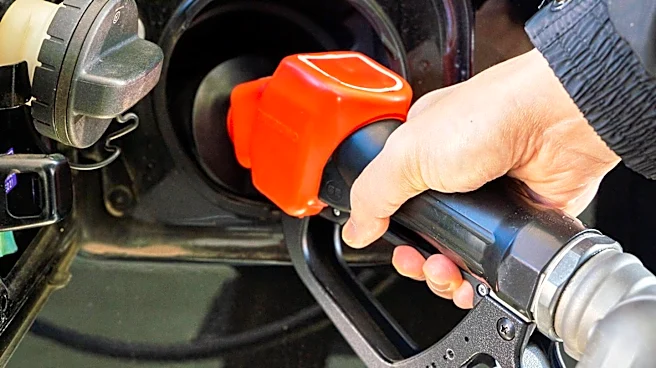
Governor Brian Kemp has declared a state of emergency and temporarily suspended Georgia's gasoline tax for 30 days, effective 12:01 AM Tuesday. This action was taken in response to global market volatility, aiming to provide financial relief to Georgians
at the pump. The order also includes a temporary pause on weight limits for commercial vehicles, which Governor Kemp stated would help reduce costs associated with everyday goods, such as groceries. Georgia's motor fuel excise tax is currently 33.3 cents per gallon for gasoline and 37.3 cents per gallon for diesel. The average price for regular unleaded gas in the state is $4.17 a gallon, compared to the national average of $4.42, according to GasBuddy.com. Governor Kemp emphasized that this measure is part of ongoing efforts to assist hardworking Georgians and small businesses through challenging economic times.
Why It's Important?
The suspension of Georgia's gas tax is a significant move designed to alleviate immediate financial pressure on consumers and businesses within the state. By reducing the cost of fuel, the measure directly impacts household budgets, potentially freeing up disposable income for other necessities. For businesses, particularly those reliant on transportation and logistics, the pause on both the gas tax and commercial vehicle weight limits could lead to reduced operational costs. This could translate into lower prices for goods, benefiting consumers across the state. The action highlights the state government's responsiveness to economic fluctuations and its commitment to supporting its citizens during periods of market instability. It also underscores the broader economic implications of global market volatility on local economies and the role of state-level interventions in mitigating these effects.
What's Next?
The gas tax suspension is set for a 30-day period, after which its continuation will likely depend on the prevailing global market conditions and the impact of the initial suspension. State officials will monitor fuel prices and economic indicators to assess the effectiveness of the measure. There may be discussions within the General Assembly regarding potential extensions or alternative relief strategies if market volatility persists. Consumers and businesses should anticipate a temporary reduction in fuel costs, but also be prepared for the tax to be reinstated at the end of the 30-day period unless further action is taken. The move could also prompt other states facing similar economic pressures to consider comparable temporary tax suspensions.
Beyond the Headlines
This temporary gas tax suspension reflects a broader trend of state governments intervening to cushion their populations from the immediate impacts of economic shocks. While providing short-term relief, such measures can also spark debate about long-term fiscal policy and the sustainability of relying on temporary tax breaks. The decision to also pause weight limits on commercial vehicles points to a holistic approach to supply chain costs, acknowledging that fuel is just one component. This highlights the interconnectedness of various economic factors and the ripple effect that changes in one area can have on others, from transportation to consumer goods pricing. The measure also implicitly acknowledges the limitations of state power in influencing global market forces, positioning such actions as reactive rather than proactive solutions to fundamental economic challenges.