
What's Happening?
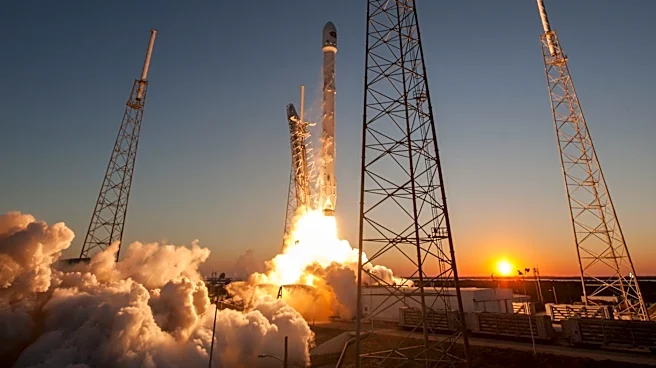
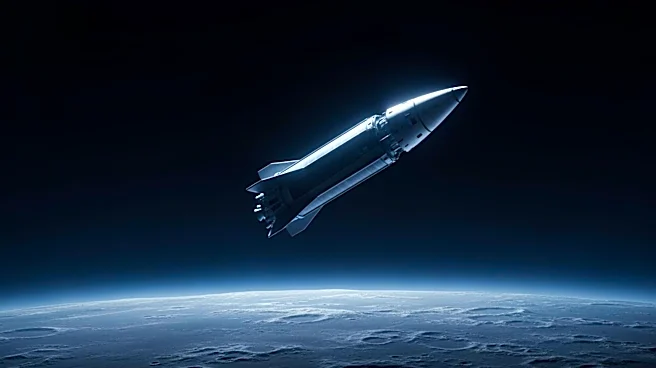
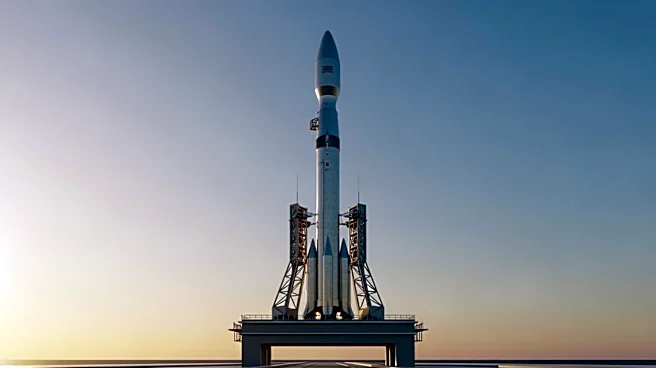
SpaceX is preparing for the launch of its CRS-34 mission, which is scheduled for no earlier than 6:05 p.m. EDT on Friday, May 15. The mission will see a Falcon 9 rocket lift off from Launch Complex 40
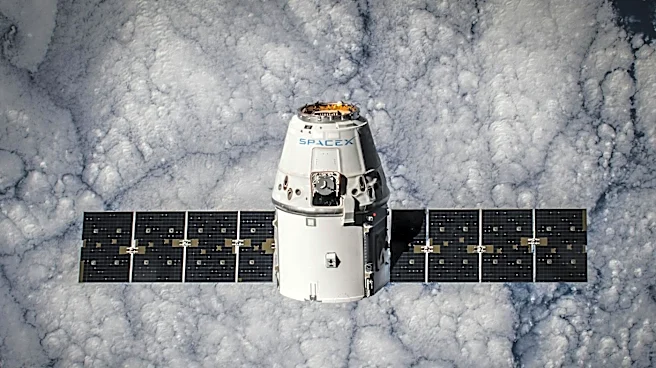
at Cape Canaveral Space Force Station in Florida, carrying a Dragon spacecraft loaded with approximately 6,500 pounds of science experiments, crew supplies, and lab hardware. The Dragon is expected to dock with the International Space Station's Harmony module on Sunday, May 17. Meanwhile, the seven-member crew aboard the ISS is engaged in various scientific and maintenance activities. NASA flight engineer Jessica Meir is involved in the Veg-06 study, focusing on plant-microbe interactions in microgravity. ESA's Sophie Adenot is setting up an incubator for the KERMIT fluorescent microscope, while other crew members are preparing for an upcoming spacewalk.
Why It's Important?
The successful launch and docking of the Dragon spacecraft are crucial for maintaining the continuous flow of supplies and scientific research on the International Space Station. The mission supports ongoing experiments that could have significant implications for future space exploration and agriculture in space. The Veg-06 study, for instance, aims to enhance food production capabilities in microgravity, which is vital for long-term missions beyond Earth. Additionally, the maintenance and preparation activities by the crew ensure the operational readiness of the ISS for future missions and experiments. This mission underscores the collaborative efforts of international space agencies and private companies like SpaceX in advancing human space exploration.
What's Next?
Following the launch, the Dragon spacecraft will dock with the ISS, where the crew will begin unloading the supplies and experiments. The crew will continue their preparations for a spacewalk scheduled later in the month, which will involve further maintenance and upgrades to the station's systems. The results of the Veg-06 study and other experiments will be analyzed to inform future missions and improve life support systems for astronauts. The ongoing collaboration between NASA, ESA, and Roscosmos will continue to play a pivotal role in the success of the ISS and future space exploration endeavors.