






What's Happening?
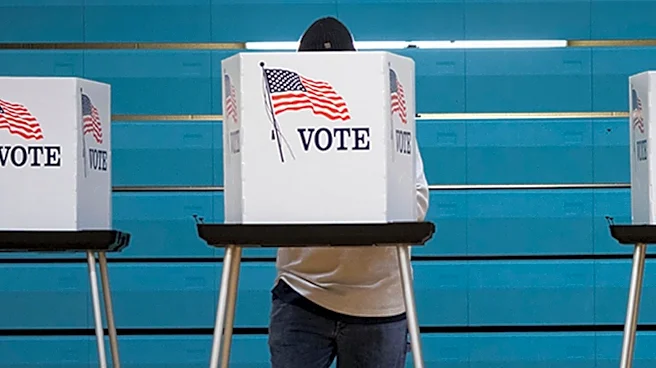
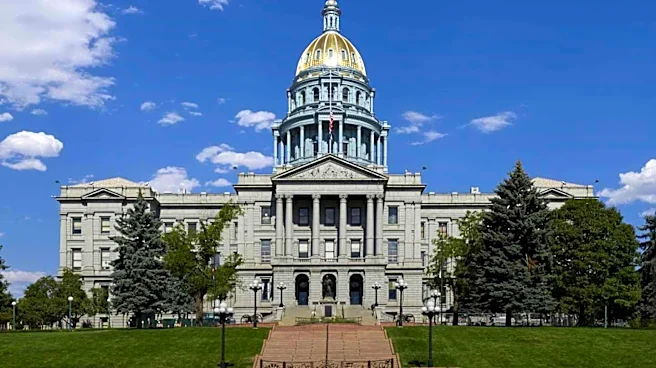
In the upcoming Colorado state primary, Democratic voters will decide between U.S. Senator Michael Bennet and State Attorney General Phil Weiser for the Democratic gubernatorial nomination. If Bennet wins both the nomination and the general election,
he will vacate his U.S. Senate seat, necessitating the appointment of a temporary replacement until the next general election in 2028. Bennet has expressed his intention to appoint a successor under the age of 50, with potential candidates including Jason Crow, Joe Neguse, and Brittany Pettersen, all of whom are under 50 and have endorsed Bennet. This decision comes amidst a broader political context where Bennet has ruled out Governor Jared Polis as a potential appointee due to Polis's controversial commutation of a sentence for an election conspiracy theorist.
Why It's Important?
The outcome of this primary and subsequent general election could significantly impact the political landscape in Colorado and the U.S. Senate. A Bennet victory would open a Senate seat, potentially altering the balance of power in a closely divided Senate. The appointment of a younger successor could also influence the Democratic Party's strategy and representation in the state. Additionally, the primary serves as a critical juncture for Colorado Democrats, who have historically dominated gubernatorial races, winning nine of the last eleven elections. The decision also highlights the ongoing political tensions and strategic maneuvers within the Democratic Party, particularly in response to actions by President Trump and his supporters.
What's Next?
Should Bennet win the gubernatorial race, the focus will shift to his choice of Senate replacement and the subsequent political dynamics in Colorado. The appointed senator will serve until the 2028 general election, providing an opportunity for the Democratic Party to solidify its influence in the state. Meanwhile, the Republican nominee for governor, likely to be either Scott Bottoms, Barb Kirkmeyer, or Victor Marx, will prepare to challenge the Democratic candidate in the general election. The outcome of these races will be pivotal in shaping Colorado's political future and could have broader implications for national politics, especially in the context of the 2026 midterm elections.