




What's Happening?
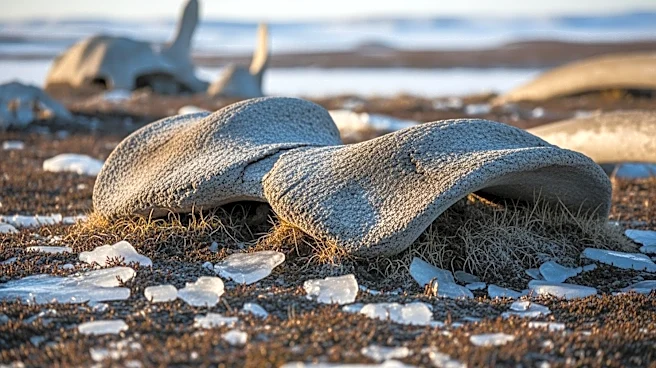
For decades, large bones discovered in Alaska's interior were believed to be from woolly mammoths, a conclusion based on their size and the prevalence of Pleistocene megafauna remains in the region. However, recent research by scientists at the University
of Alaska Fairbanks has overturned this long-standing belief. Radiocarbon dating revealed that the bones are only 2,000 to 3,000 years old, much younger than the expected timeline for mammoths, which largely disappeared around 13,000 years ago. Further analysis, including chemical and DNA testing, identified the bones as belonging to marine animals, specifically whales. This discovery was published in the Journal of Quaternary Science, highlighting the bones' nitrogen-15 and carbon-13 isotope signatures typical of marine life. The study suggests several theories for how these whale bones ended up so far inland, including ancient human transport or a possible museum mix-up.
Why It's Important?
This revelation is significant as it challenges previous assumptions about the presence of mammoths in Alaska during the Late Holocene. Had the bones been mammoth remains, it would have necessitated a major revision of the species' extinction timeline in North America. The discovery also underscores the importance of scientific verification and the potential for historical misinterpretations. It highlights the need for careful examination of archaeological finds and the role of advanced technologies in uncovering the true origins of ancient remains. This case serves as a reminder of the complexities involved in piecing together historical narratives and the potential for new insights to reshape our understanding of prehistoric life.
What's Next?
The study opens up new avenues for research into the movement of marine remains and the interactions between ancient humans and their environment. Researchers may further investigate the possibility of human transport of whale bones inland, which could provide insights into the cultural practices of prehistoric peoples in Alaska. Additionally, the scientific community may explore other regions for similar misidentified remains, potentially leading to more discoveries that could alter historical timelines. The findings also encourage museums and researchers to re-evaluate their collections and ensure accurate labeling and documentation of specimens.
Beyond the Headlines
The discovery raises questions about the ethical responsibilities of museums and researchers in maintaining accurate records and the potential consequences of mislabeling historical artifacts. It also highlights the cultural significance of marine life in prehistoric societies and the ways in which ancient peoples might have interacted with their environment. The study may prompt discussions on the preservation of archaeological sites and the importance of interdisciplinary approaches in uncovering the past. Furthermore, it illustrates the dynamic nature of scientific inquiry and the ongoing quest to understand the complexities of Earth's history.