










What's Happening?
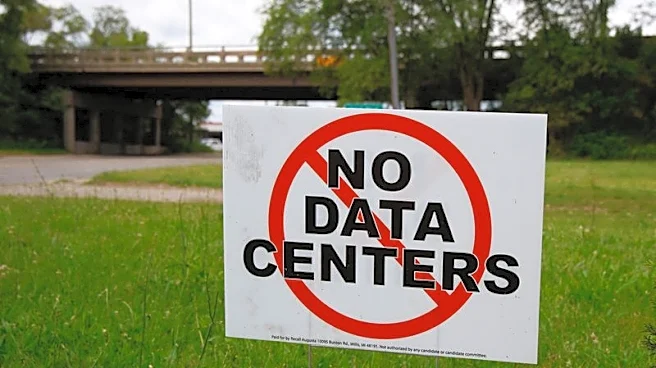
Environmental activist Erin Brockovich has initiated a nationwide project to map community concerns about AI data centers, following a surge of emails from residents in Louisiana. The project aims to document the rapid expansion of AI-powered data centers, which
require significant electricity and water for cooling. Brockovich's mapping initiative has collected thousands of reports from residents who feel inadequately informed about these projects. The map, hosted on BrockovichDataCenter.com, has already recorded over 8,000 community-reported locations of operational, proposed, and under-construction data centers. The initiative highlights issues such as water consumption, energy use, and impacts on local infrastructure, with Brockovich advocating for greater transparency and community involvement in planning processes.
Why It's Important?
The expansion of AI data centers is a critical issue due to their substantial environmental footprint and resource demands. These centers are essential for supporting the growing demand for AI computing power, but they also pose challenges for local communities, including noise, land use, and infrastructure strain. Brockovich's project underscores the need for transparency and public engagement in the planning of such facilities. The initiative could influence policy discussions and regulatory approaches to balance technological advancement with environmental and community considerations. As AI technology continues to grow, the outcomes of this project may shape future infrastructure development and community relations across the U.S.
What's Next?
Brockovich's project is likely to prompt further public discourse and potentially influence local and national policy regarding data center development. Communities may push for more stringent regulations and transparency measures, while technology companies might need to address environmental and social concerns more proactively. The project's findings could lead to increased advocacy for sustainable practices in the tech industry and more robust community engagement strategies. As the map continues to grow, it may serve as a tool for policymakers and activists to advocate for changes in how data centers are planned and managed.