



What's Happening?
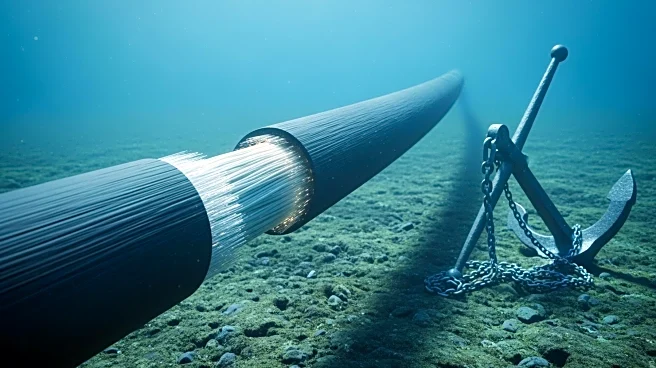
Finnish authorities have detained a ship and its crew following damage to a critical undersea telecommunication cable connecting Finland and Estonia. The incident, which occurred on Wednesday, involved the vessel Fitburg, flagged by Saint Vincent and the Grenadines.
Finnish police discovered the ship with its anchor chain lowered in Finnish waters, while the damage site was located in Estonian waters. The crew, consisting of 14 members from Russia, Georgia, Kazakhstan, and Azerbaijan, has been detained. The Finnish National Police Commissioner, Ilkka Koskimäki, announced that the incident is being investigated as aggravated criminal damage and interference with telecommunications. The damaged cable, operated by Finnish telecommunications provider Elisa, runs between Helsinki and Tallinn. Although the extent of the damage is unclear, it has caused significant faults. This event is part of a pattern of disruptions in the Baltic Sea, with at least 10 undersea cables damaged since 2023.
Why It's Important?
The damage to the undersea cable highlights vulnerabilities in critical infrastructure, raising concerns about potential sabotage. Such incidents can disrupt communication and data transfer, impacting economic and security operations. The Baltic Sea has seen a series of similar disruptions, with suspicions often directed towards Russia, although the country denies involvement. The incident underscores the need for enhanced protection of undersea infrastructure, prompting NATO to initiate projects aimed at safeguarding these assets. The situation also emphasizes the importance of international cooperation, as seen in the collaboration between Finland and Estonia to address the issue. The incident could lead to increased scrutiny and regulatory measures to prevent future occurrences.
What's Next?
Finnish and Estonian authorities are expected to continue their investigation into the incident, potentially leading to legal actions against those responsible. The situation may prompt further discussions within NATO and the European Union regarding the protection of critical infrastructure. Countries in the region might enhance their surveillance and security measures to prevent similar incidents. Additionally, there could be diplomatic engagements to address the broader implications of such disruptions, particularly if evidence suggests state involvement. The incident may also lead to technological advancements in monitoring and securing undersea cables.