


What's Happening?
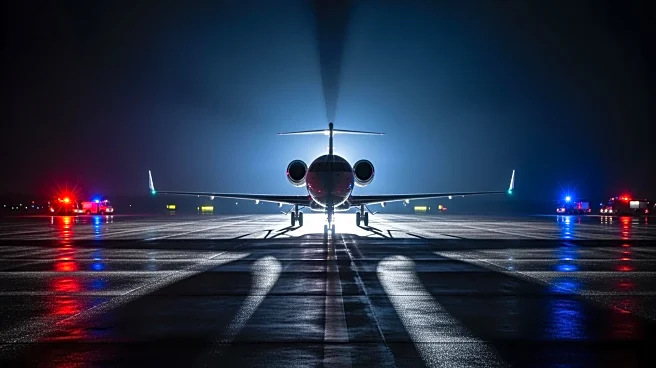
A security scare at Palm Beach International Airport led to chaos as F-16 fighter jets were deployed to intercept a civilian aircraft that violated a Temporary Flight Restriction. The incident occurred just hours before President Trump's scheduled departure
on Air Force One. The North American Aerospace Defense Command (NORAD) confirmed that flares were used to communicate with the pilot, and the situation was resolved safely. Initial reports suggested a drone scare, but a White House official clarified that there was no drone incursion. The Federal Aviation Administration issued a ground stop, which was lifted once communication with the aircraft was reestablished.
Why It's Important?
The incident underscores the importance of airspace security, especially around high-profile figures like President Trump. It highlights the challenges faced by aviation authorities in managing restricted airspace and ensuring the safety of both civilian and military operations. The use of military jets and flares in civilian airspace raises questions about the protocols and communication strategies employed during such incidents. The event also reflects the heightened security measures in place for presidential travel and the potential disruptions these can cause to civilian air traffic.
What's Next?
Authorities may review and potentially revise airspace security protocols to prevent similar incidents in the future. The incident could lead to increased scrutiny of Temporary Flight Restrictions and the communication processes between civilian pilots and military authorities. The Federal Aviation Administration and NORAD may conduct investigations to understand the cause of the airspace violation and implement measures to enhance security. Additionally, there may be discussions on improving public awareness of airspace restrictions to prevent accidental violations.