
What's Happening?
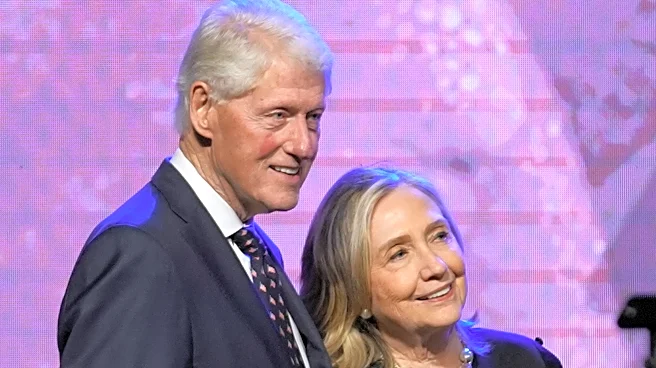
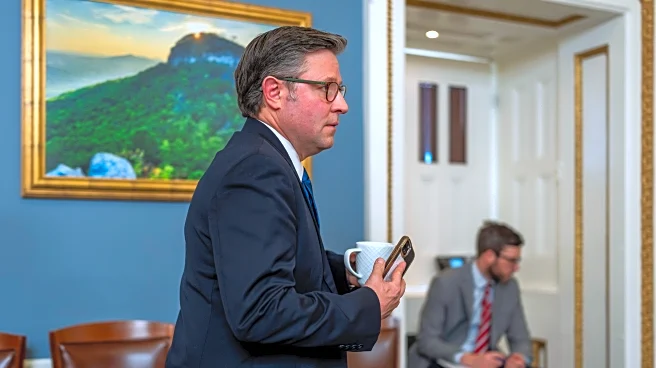
Former President Bill Clinton is facing the possibility of being held in contempt of Congress after failing to appear for a deposition scheduled by the House Oversight Committee. The committee, led by Chairman
James Comer, R-Ky., is investigating Clinton's connections to Jeffrey Epstein. Both Bill and Hillary Clinton were subpoenaed to testify, but neither confirmed their attendance. The committee has warned that failure to comply could result in contempt proceedings, which may lead to a criminal referral to the Department of Justice. Clinton has denied any wrongdoing in relation to Epstein.
Why It's Important?
The potential contempt proceedings against Bill Clinton highlight the ongoing scrutiny of high-profile individuals linked to Jeffrey Epstein. The situation underscores the challenges faced by congressional committees in enforcing subpoenas and the broader implications for legal accountability. The investigation into Epstein's network continues to be a politically charged issue, with significant public interest in the outcomes. The committee's actions could set a precedent for how similar cases are handled in the future, impacting the balance of power between Congress and former government officials.
What's Next?
The House Oversight Committee is expected to vote on whether to hold Bill Clinton in contempt of Congress. If the vote passes, the matter will be referred to the full House for consideration. A successful vote could lead to a criminal referral to the Department of Justice, which would then decide whether to pursue legal action. The Clintons have indicated their intent to challenge the contempt charges, potentially leading to further legal proceedings. The outcome of this situation could influence future congressional investigations and the enforcement of subpoenas.