






What's Happening?
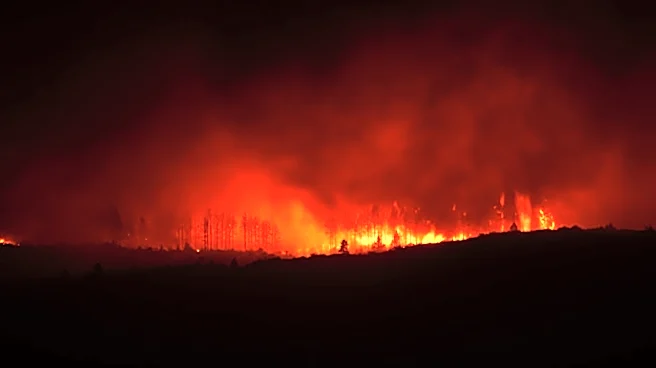
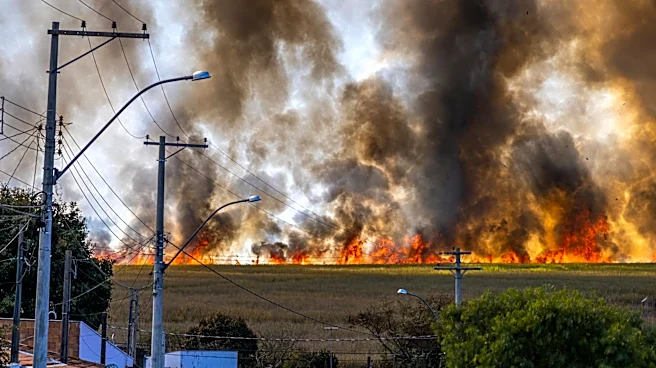
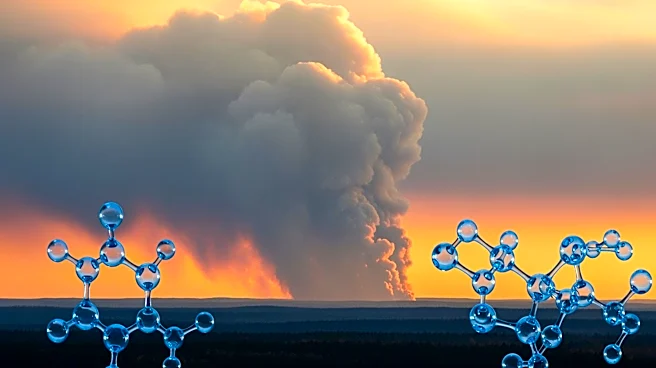
A NASA-funded study has identified that wildfire smoke has significantly contributed to increased ground-level ozone pollution across the contiguous United States over the past decade. This pollution, often referred to as smog, has offset nearly four
years of ozone-control progress, particularly affecting the West and Midwest regions. The study highlights that wildfires emit gases like carbon monoxide, which, when mixed with other pollutants, form surface ozone. This invisible pollutant poses health risks, including respiratory issues, and can affect plants and crops. The research utilized deep learning to analyze data from 2003 to 2024, revealing that wildfires have reversed ozone reduction trends since 2015. The study also noted an increase in premature deaths linked to wildfire-driven ozone exposure.
Why It's Important?
The findings underscore the growing challenge of managing air quality in the face of increasing wildfire activity. The study's results are crucial for public health, as ground-level ozone can exacerbate respiratory conditions and lead to premature deaths. The research provides valuable insights for air quality managers, enabling them to make informed decisions to protect communities from the adverse effects of wildfire smoke. The study also highlights the importance of NASA's satellite observations in tracking air quality patterns, which are essential for understanding the widespread impact of wildfires on air pollution.
What's Next?
The study suggests that continued monitoring and research are necessary to better understand and mitigate the impact of wildfires on air quality. NASA's ongoing missions, such as the TEMPO satellite, will play a critical role in providing detailed air quality data. This information will help develop strategies to manage and reduce the health risks associated with wildfire-driven ozone pollution. Additionally, the development of decision-support systems like FireAQ aims to assist state and local officials in predicting and responding to smoke-related pollution events.