







What's Happening?
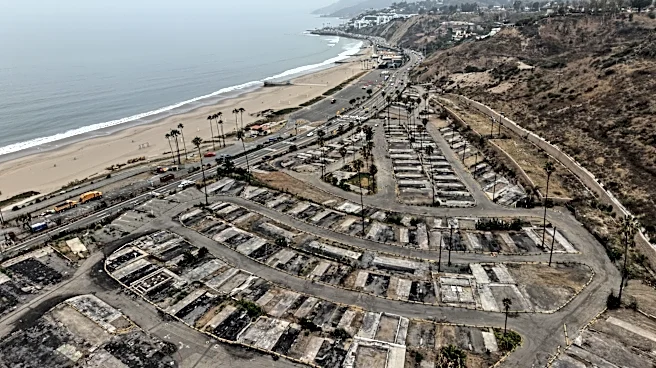
Jonathan Rinderknecht, a 30-year-old Uber driver, is on trial in Los Angeles federal court, accused of starting the Palisades Fire, one of Southern California's deadliest wildfires. The fire, which occurred last year, resulted in the deaths of 12 people.
Rinderknecht has been indicted on three felony counts related to arson and destruction of property. Prosecutors allege that he initially ignited the Lachman Fire, which was believed to have been extinguished but later reignited as the Palisades Fire. Rinderknecht has pleaded not guilty, with his defense arguing that the blaze was sparked by a nearby firework. His trial began with jury selection, which included individuals who were victims of the fires. Rinderknecht's father, a French missionary, has shown support by attending the trial.
Why It's Important?
The trial of Jonathan Rinderknecht is significant as it addresses accountability in one of the most devastating wildfires in Southern California's recent history. The outcome could set a precedent for how arson-related cases are prosecuted, especially those resulting in significant loss of life and property. The case also highlights the challenges in wildfire management and prevention, as well as the legal complexities involved in proving arson. The trial's proceedings may influence public policy on fire safety and emergency response strategies, potentially leading to stricter regulations and preventive measures to mitigate future wildfire risks.
What's Next?
As the trial progresses, the focus will be on the evidence presented by both the prosecution and defense. The jury's decision will be closely watched, as it could impact future legal actions against individuals accused of causing wildfires. If convicted, Rinderknecht faces up to 45 years in prison, which would serve as a strong deterrent against similar actions. The trial may also prompt discussions among lawmakers and environmental agencies about enhancing fire prevention and response strategies, potentially leading to new legislation aimed at reducing the risk of wildfires.