




What's Happening?
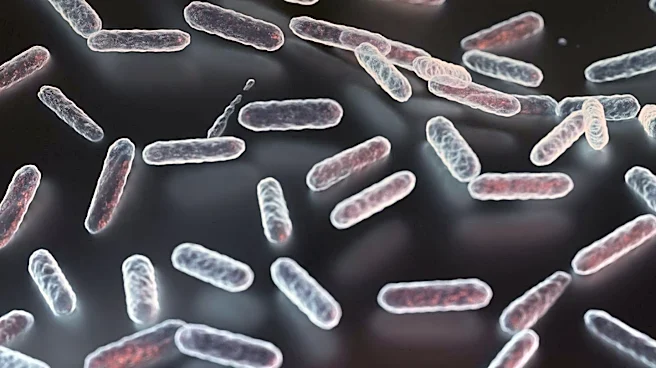
Researchers at the University of Tokyo have identified a previously unknown bacterium, Candidatus Abyssoplasma scotoplanesicola, residing within the body walls of deep-sea pigs, a type of sea cucumber. This bacterium possesses an exceptionally small genome,
containing only 649,000 DNA bases, yet dedicates over a quarter of its genetic material to producing unusually large surface-associated proteins, some exceeding 5,000 amino acids in length. The bacterium's reduced genome suggests a high dependency on its sea pig host for essential compounds like amino acids, nucleic acid precursors, lipids, and mineral nutrients, which it cannot produce independently. Fluorescence imaging confirmed the bacterium's location within the sea pig's tissues. While the benefit to the bacterium is clear, the advantage for the sea pig remains undetermined, though researchers speculate it might involve defense against pathogens. This discovery offers new insights into bacterial adaptation and host-dependent lifestyles in deep-sea environments.
Why It's Important?
This discovery is significant for understanding the complex symbiotic relationships that exist in extreme environments like the deep ocean. The unique genetic characteristics of Candidatus Abyssoplasma scotoplanesicola, particularly its small genome and large surface proteins, provide a model for studying how bacteria evolve to become highly dependent on their hosts. Such research can shed light on fundamental biological processes, including nutrient exchange and host-microbe interactions, which are crucial for the health and function of ecosystems. Understanding these relationships can also inform broader ecological studies, especially given that sea cucumbers constitute a significant portion of deep-sea biomass. The findings contribute to the growing knowledge of microbial diversity and the intricate web of life in unexplored oceanic depths, potentially revealing novel biochemical pathways or ecological roles.
What's Next?
Future research will focus on elucidating the precise functions of the bacterium's unusually large surface proteins and determining the nature of its interaction with the sea pig. Scientists aim to understand how Candidatus Abyssoplasma scotoplanesicola became so dominant in the sea pig's body wall and what competitive advantages it possesses over other microorganisms. A key objective is to ascertain whether this symbiotic relationship provides any benefit to the sea pig, such as protection from disease. Further investigations will also explore the broader implications of this host-dependent lifestyle, seeking to understand the evolutionary pressures that drive such adaptations. This ongoing research could provide fundamental insights into bacterial colonization of hosts and the development of intimate, long-lasting biological partnerships.
Beyond the Headlines
The discovery of Candidatus Abyssoplasma scotoplanesicola highlights the vast unknown biodiversity within deep-sea ecosystems and the potential for uncovering novel biological mechanisms. The bacterium's highly reduced genome and reliance on its host exemplify an extreme form of co-evolution, where one organism becomes intricately integrated into the metabolic machinery of another. This raises broader questions about the definition of individuality and the boundaries between species in symbiotic relationships. From a biotechnological perspective, understanding the unique proteins and metabolic pathways involved could lead to new discoveries in fields like medicine or industrial applications. Ethically, this research underscores the importance of preserving deep-sea environments, as they may harbor countless undiscovered species with unique biological properties that could be lost before they are even identified.