
What's Happening?
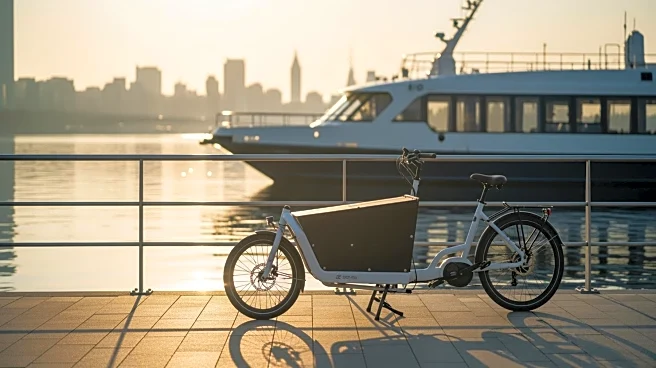
A demonstration project in Manhattan showcased the use of freight ferries and cargo bikes to transport fresh seafood from the Fulton Fish Market to the South Street Seaport, and then to the Tin Building
food hall. This initiative, part of the Blue Highways program, aims to reduce reliance on delivery trucks and lower greenhouse gas emissions. The project was organized by Empire Clean Cities, a nonprofit focused on reducing emissions, and involved transporting seafood over a short distance using zero-emission methods. The demonstration is part of broader efforts to explore sustainable urban freight solutions and reduce congestion in New York City.
Why It's Important?
The project highlights innovative approaches to urban freight transport, addressing the environmental impact of traditional delivery methods. With 90% of New York City's freight moving by truck, initiatives like this could significantly reduce emissions and traffic congestion. The success of such projects could encourage more businesses to adopt sustainable delivery practices, contributing to cleaner air and improved urban mobility. As cities worldwide grapple with similar challenges, New York's efforts could serve as a model for integrating waterways and non-motorized transport into urban logistics.
What's Next?
Organizers plan to expand the pilot project in the spring, offering regular delivery services between Hunts Point and Lower Manhattan. The initiative aims to refine the business model and logistics, potentially making water and bike deliveries competitive with traditional trucking. Success could lead to broader adoption of these methods, influencing policy and infrastructure development to support sustainable urban freight systems. Continued collaboration between public and private sectors will be crucial in scaling these efforts and achieving long-term environmental benefits.