




What's Happening?
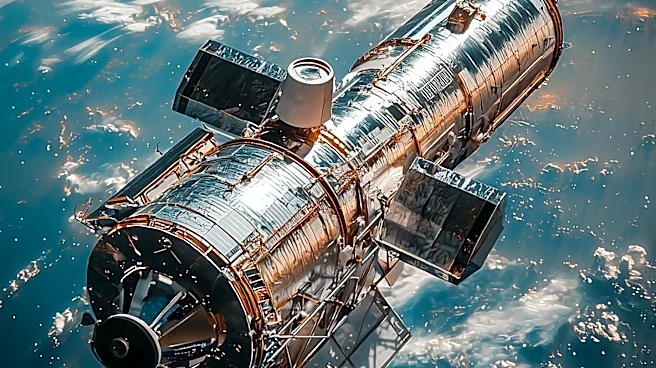
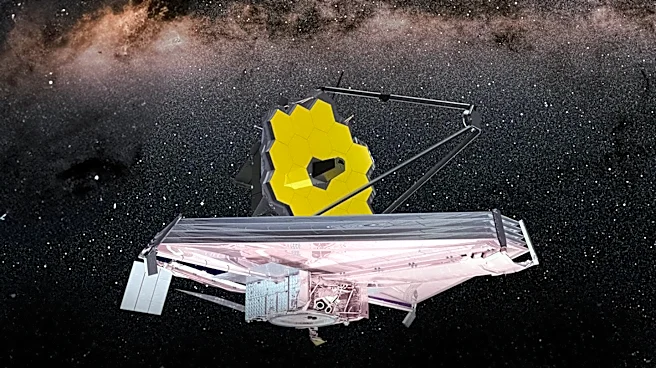
Researchers are currently analyzing high-resolution images from the James Webb Space Telescope (JWST) to study auroral emissions on Uranus and Neptune. These emissions, which occur when charged particles from the sun interact with the planets' atmospheres,
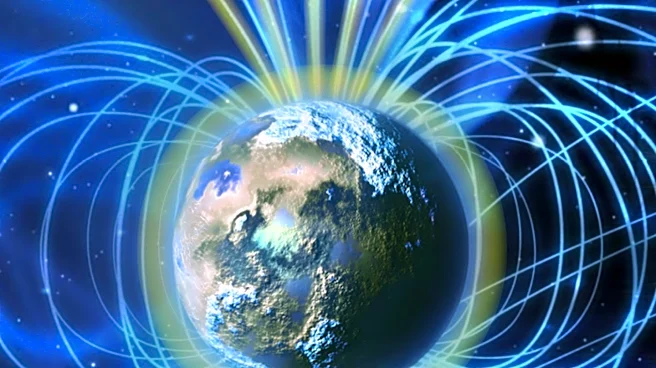
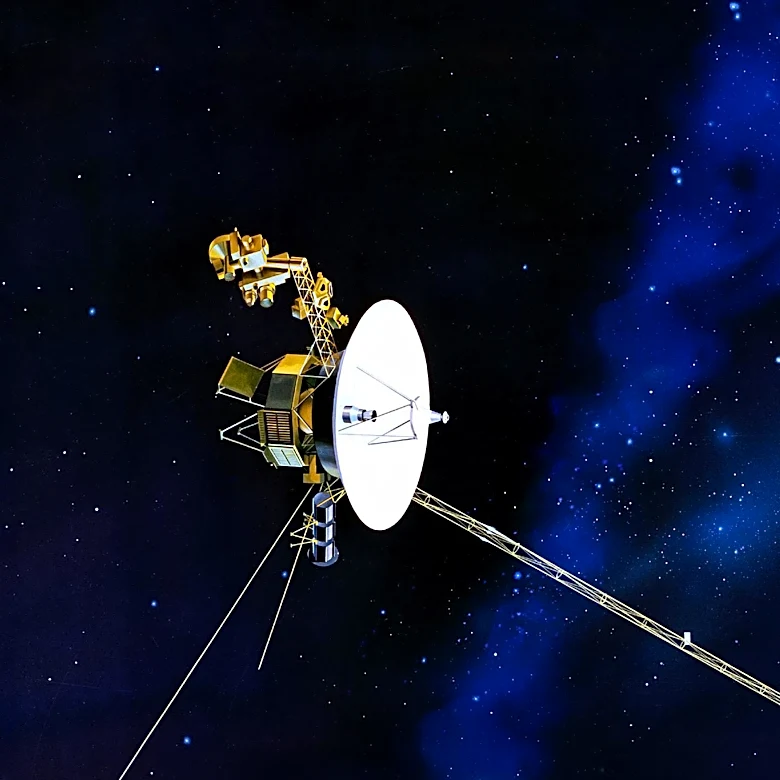
are expected to provide crucial insights into the current state of their magnetic fields. The focus is on determining if the magnetic dipole of these ice giants has shifted since the Voyager 2 mission in the 1980s. Dynamo simulations suggest that the magnetic fields of Uranus and Neptune could change significantly within decades, with tilts shifting by tens of degrees. This research aims to combine JWST auroral data with Voyager 2 observations and dynamo simulations to estimate the current configuration of these planets' magnetic fields.
Why It's Important?
Understanding the magnetic fields of Uranus and Neptune is vital for comprehending the fundamental processes governing planetary interiors and their evolution. Earth's magnetic field, which is relatively stable, protects our planet from solar radiation. The highly disordered and potentially rapidly shifting magnetic fields of the ice giants present a unique opportunity to study different dynamo mechanisms. This research could refine our models of planetary formation and evolution, impacting our understanding of exoplanets with similar characteristics. The findings could also inform future space missions to these distant planets, guiding the design of instruments and scientific objectives to further explore their unique magnetic environments.
What's Next?
The researchers plan to integrate the data from the JWST auroral images with the historical magnetic field observations from Voyager 2 and their ongoing dynamo simulations. This combined approach is expected to yield a more accurate estimation of how the magnetic fields of Uranus and Neptune are configured today. However, to fully understand the interiors of these planets and the mechanisms driving their magnetic fields, the researchers emphasize the necessity of additional dedicated missions to the ice giants. Such future missions would provide in-situ measurements and more comprehensive data, building upon the insights gained from the current JWST analysis.
Beyond the Headlines
The study of Uranus and Neptune's magnetic fields extends beyond mere planetary science; it touches upon fundamental physics and the behavior of matter under extreme conditions. The hypothesis that electrical conductivity increases with depth in these planets' interiors, causing their unique magnetic characteristics, challenges conventional understanding of planetary dynamos. This research could lead to a re-evaluation of how magnetic fields are generated in planets with different compositions and internal structures than Earth. The rapid shifts predicted by the models also raise questions about the long-term stability of planetary magnetic fields and their implications for atmospheric retention and habitability in other star systems.