



What's Happening?
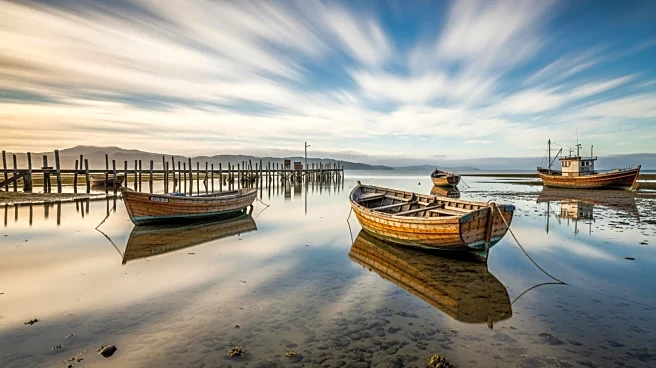
NPR's international team has highlighted Chiloé Island, located just north of Patagonia, in its Far-Flung Postcards series. The island is renowned for its rapidly changing tides, which have become a significant part of local folklore. The tides are so
swift that they have inspired tales of witches and sorcery. One such story involves a Spanish cartographer, José de Moraleda y Montero, who was challenged by a local sorceress named Chillpila in the 18th century. Chillpila won the duel by causing the tide to recede quickly, grounding Moraleda's ship, and earning a book of sorcery as a prize. This legend was even referenced in a famous witch trial on the island in 1880. Today, the tides continue to enchant visitors as they flow beneath the colorful houses on stilts, with the island's witch lore preserved in gift shops and books.
Why It's Important?
The exploration of Chiloé Island's tides and folklore by NPR provides insight into the cultural and historical richness of the region. Such stories contribute to the understanding of how natural phenomena can shape local traditions and beliefs. The island's lore, including tales of witches and sorcery, reflects the unique cultural heritage that attracts tourists and researchers alike. This coverage not only highlights the island's natural beauty but also underscores the importance of preserving cultural narratives that define communities. For the U.S. audience, it offers a glimpse into the diverse cultural landscapes beyond their borders, fostering a greater appreciation for global heritage.