
What's Happening?
President Donald Trump has signed an executive order to create a national policy framework for artificial intelligence (AI), aiming to replace the current state-by-state regulatory approach. The order directs
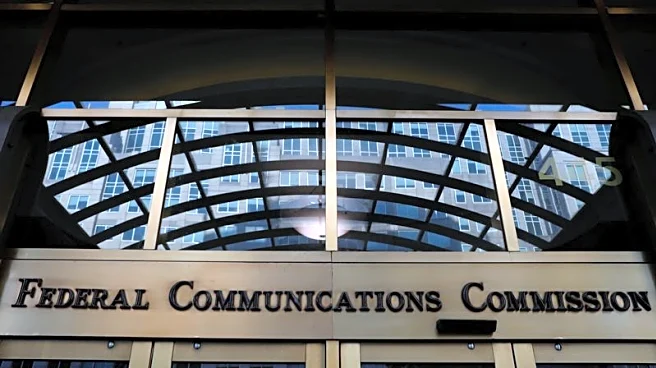
the Department of Justice to challenge state AI laws, arguing that AI should be regulated federally as interstate commerce. The Commerce Department is tasked with identifying 'onerous' state laws, which could affect states' eligibility for federal funds. The order also involves the Federal Trade Commission and Federal Communications Commission in exploring federal standards. While intended to provide regulatory clarity, the order may lead to legal battles and uncertainty for startups navigating conflicting state and federal demands.
Why It's Important?
The executive order seeks to centralize AI regulation at the federal level, potentially benefiting large tech companies by reducing compliance costs and legal uncertainties. However, the order's implementation could face significant legal challenges, as states defend their regulatory authority. The resulting legal battles may create a prolonged period of uncertainty for startups, which could face difficulties in navigating shifting regulations. The order's impact on AI innovation and adoption will depend on the resolution of these legal conflicts and the establishment of a national framework.
What's Next?
The executive order's implementation will likely be contested in court, with states challenging the federal government's authority to preempt state laws. The outcome of these legal battles could shape the future of AI regulation in the U.S., influencing how quickly a national framework can be established. The order's impact on startups and the broader tech industry will depend on the resolution of these conflicts and the establishment of a clear regulatory environment.