






What's Happening?
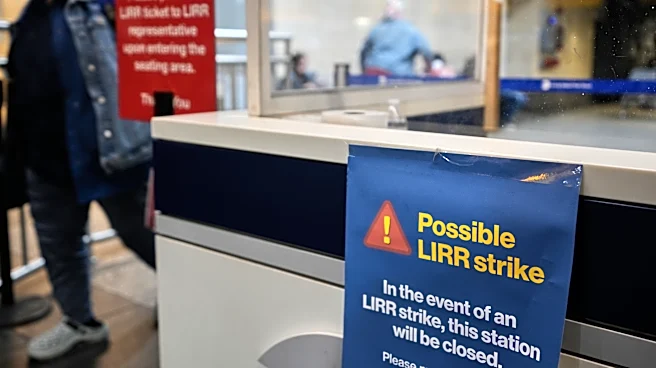
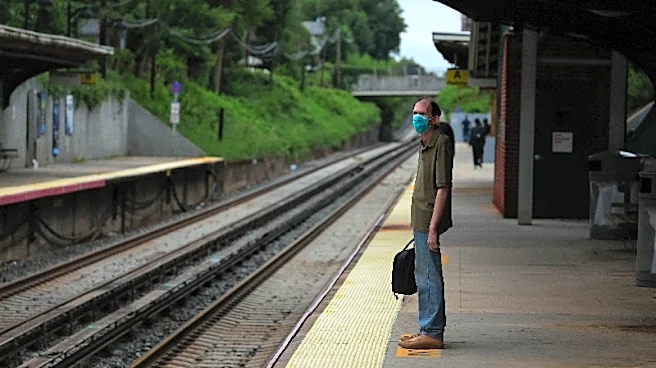
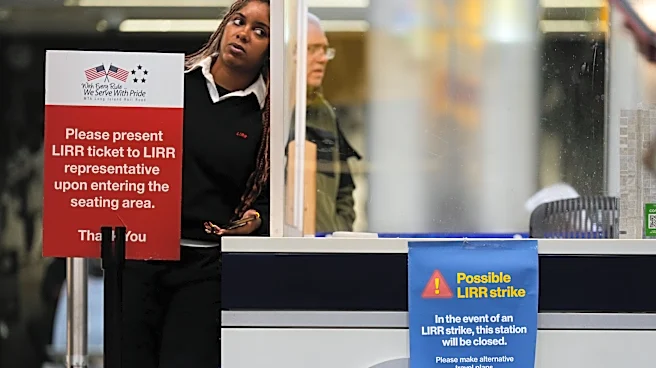
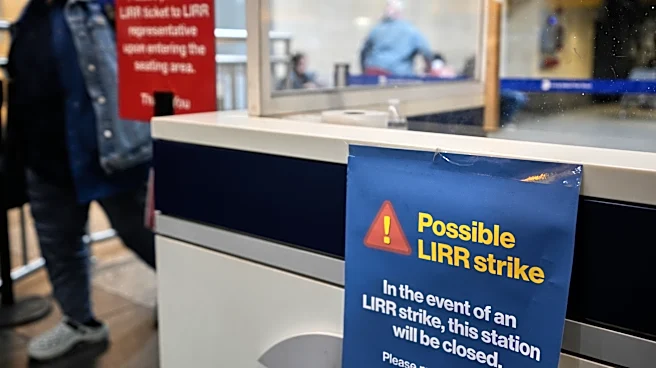
The Long Island Rail Road (LIRR), North America's largest commuter rail system, has been shut down due to a strike by unionized workers. The strike began on May 16, 2026, after the Metropolitan Transportation Authority (MTA) and five unions representing
3,500 workers failed to reach an agreement on a new four-year contract. The dispute centers around wage increases, with the unions demanding a 5% raise while the MTA offered a 3% increase with potential to reach 4.5% under certain conditions. The strike has left approximately 250,000 daily commuters seeking alternative transportation options. Governor Kathy Hochul and MTA Chairman Janno Lieber have expressed their concerns, urging both parties to return to negotiations. The strike has also been linked to actions by the Trump administration, which allegedly cut mediation short, pushing the negotiations towards a strike.
Why It's Important?
The strike has significant implications for commuters in southeastern New York, as the LIRR is a critical transportation link for the region. The disruption affects not only daily commuters but also impacts major events, such as sports games, causing broader economic and social consequences. The MTA's financial stability is at stake, as meeting union demands could lead to fare hikes and increased taxpayer burdens. The situation highlights the challenges of balancing fair labor practices with fiscal responsibility, especially in a post-COVID economic environment. The strike also underscores the political dynamics at play, with Governor Hochul and other officials navigating the fallout from the Trump administration's involvement in the mediation process.
What's Next?
No new negotiations have been scheduled, leaving the resolution of the strike uncertain. The MTA has implemented shuttle bus services to mitigate the impact on commuters, but these are not a full substitute for the rail service. The unions and the MTA remain far apart in their demands, and without a compromise, the strike could continue to disrupt the region. Political leaders, including Governor Hochul, are likely to face increasing pressure to broker a deal. The ongoing strike may also influence upcoming political campaigns, as candidates like Nassau County Executive Bruce Blakeman criticize the current administration's handling of the situation.
Beyond the Headlines
The strike raises broader questions about labor relations and the role of government in mediating disputes. It highlights the tension between union demands for fair wages and the financial constraints faced by public transportation systems. The situation also reflects the broader economic challenges of maintaining infrastructure and public services in a time of fiscal austerity. Additionally, the strike may prompt discussions about the future of remote work and its impact on public transportation demand, as more workers may opt to work from home during such disruptions.