







What's Happening?
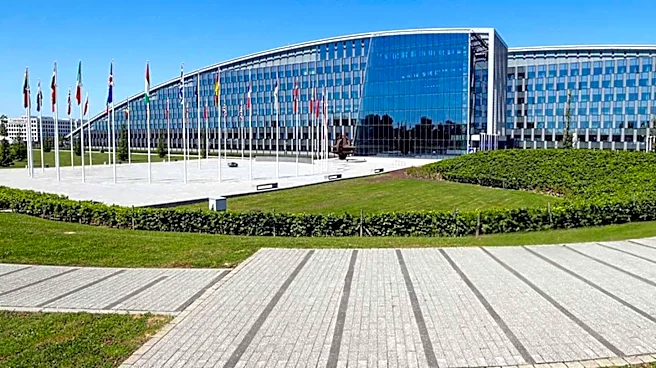
The 2026 NATO Summit, held in Ankara on July 7-8, reaffirmed NATO's 360-degree approach to security, with discussions extending to the wider regional security environment, including Iran and freedom of navigation in the Strait of Hormuz. While the summit's
primary focus remained on defense investments, support for Ukraine, and broader Alliance capabilities, it also addressed the increasing strategic importance of NATO's Southern Flank. The ongoing conflict involving Iran, which began in February 2026 and has seen renewed strikes, has highlighted the Southern neighborhood as an operational security environment with implications for Allied territory and deterrence credibility. This conflict has led to significant volatility in global energy prices and has regionalized with Iranian attacks affecting several countries, including the interception of ballistic missiles in Turkish airspace by NATO air defense systems.
Why It's Important?
The Ankara Summit's focus on the Southern Flank is critical because the region is no longer merely a zone for dialogue but an active operational environment directly impacting NATO's security. The prolongation and intensification of the Iran conflict have exposed strains in Allied coherence and raised questions about the sufficiency of NATO's existing Southern neighborhood framework. The deployment of an additional Patriot battery to Adana, Turkey, in response to missile interceptions, demonstrates the direct consequences of instability in the South for Allied territory. Furthermore, the conflict has highlighted the vulnerability of energy security and maritime chokepoints, which are vital for U.S. and European economies. The summit's discussions aim to develop a more coherent Southern strategy, moving beyond a combination of national, bilateral, and Allied initiatives to a more unified approach to address these complex security challenges.
What's Next?
Looking ahead, NATO is expected to further upgrade its institutional presence in the South. The Alliance will need to consider additional resources, institutional mechanisms, and greater political coordination with regional countries to adapt to the increasingly critical security environment. The ongoing conflict serves as a test of whether NATO's existing mechanisms are sufficient to respond to a more volatile security landscape. The fact that Turkey, a NATO member, has felt it necessary to join a parallel collective defense arrangement (the Makkah Joint Defense Agreement) underscores the institutional gap that NATO needs to address. Future efforts will likely focus on ensuring that the Southern neighborhood receives sustained political attention, resources, and adaptable mechanisms to address its growing strategic importance, recognizing it as an increasingly consequential security frontier rather than just a flank.
Beyond the Headlines
The evolving situation on NATO's Southern Flank reveals a fundamental shift in global security dynamics, where regional conflicts can rapidly escalate and have far-reaching implications for international alliances. The Iran conflict, in particular, highlights the interconnectedness of energy security, maritime trade, and regional stability with broader geopolitical interests. The challenges faced by NATO in balancing its Eastern and Southern dimensions simultaneously underscore the complexities of a 360-degree security approach. This situation also brings into focus the credibility of U.S. security guarantees and the need for allies to adapt to fluctuating U.S. policy. The development of parallel defense arrangements by NATO members suggests a potential fragmentation of security efforts if the Alliance does not effectively address the diverse and evolving threats across its operational areas.