






What's Happening?
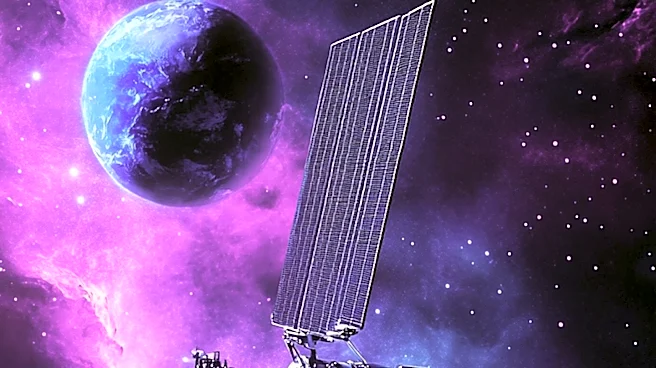
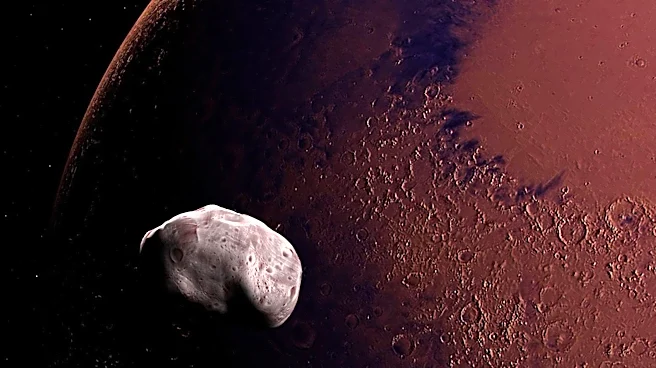
NASA's Psyche spacecraft recently completed a gravity assist maneuver using Mars, which occurred from May 2 to May 15, 2026. This maneuver involved the spacecraft flying by Mars to gain additional speed and adjust its trajectory slightly. The approach
allowed the spacecraft to capture images of Mars as a crescent, due to the high phase angle of approach, with sunlight reflecting off the planet's surface. This gravity assist is a critical step in the mission's journey to the metal-rich asteroid Psyche, which the spacecraft is expected to reach in 2029. The flyby also served as a preparatory exercise for the scientific observations that will be conducted upon arrival at the asteroid.
Why It's Important?
The gravity assist maneuver is a pivotal component of the Psyche mission, enabling the spacecraft to conserve fuel while increasing its velocity, which is essential for reaching its distant target. This mission is significant as it aims to study the asteroid Psyche, believed to be composed largely of metallic iron and nickel, similar to Earth's core. Understanding Psyche could provide insights into the building blocks of planet formation and the history of our solar system. The mission's success could also pave the way for future deep-space exploration missions, enhancing our understanding of celestial bodies and their compositions.
What's Next?
Following the successful gravity assist, the Psyche spacecraft will continue its journey towards the asteroid, with an expected arrival in 2029. The mission team will focus on preparing for the scientific phase of the mission, which will involve detailed observations and data collection of the asteroid's surface and composition. The findings from this mission could have implications for planetary science and our understanding of the solar system's formation. Additionally, the mission's progress will be closely monitored by the scientific community and space exploration enthusiasts.