






What's Happening?
Iran's regional strategy, built around proxy warfare and maintaining a 'ring of fire' surrounding Israel, is facing significant challenges. The events following October 7 have exposed the structural weaknesses of Iran's approach. Tehran's attempt to ignite
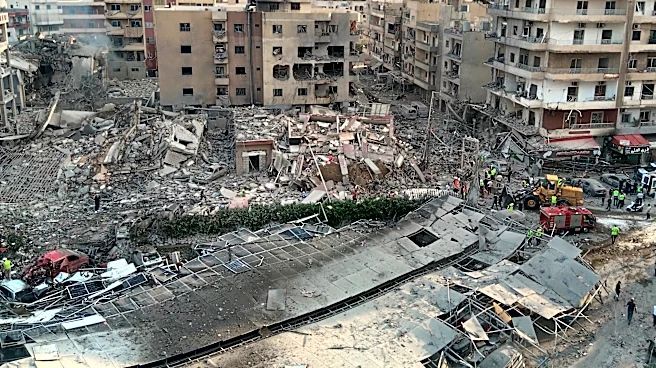
a broad confrontation through allied groups aimed to halt regional normalization and re-center the Palestinian issue. However, Hamas has suffered military losses, and Hezbollah faces unprecedented strategic pressure. Iran's network of proxies appears overstretched and vulnerable, revealing the limits of proxy warfare as a long-term strategy.
Why It's Important?
The collapse of Iran's Axis of Resistance has profound implications for regional stability. Iran's influence depended on proxy warfare to project power while avoiding direct confrontation. The weakening of Hezbollah and Hamas challenges Iran's ability to maintain strategic depth and deterrence. This shift impacts Israel's strategic calculations, potentially expanding its operational freedom across the region. The changing dynamics could lead to a reevaluation of Iran's regional doctrine, as Arab governments prioritize economic modernization and strategic stability over ideological conflict.
What's Next?
As Iran's external architecture weakens, pressure increasingly travels inward. The regime faces internal vulnerabilities, including economic hardship and social frustration. The strategic geography of deterrence is changing, with the battlefield moving closer to Iranian territory. Tehran can no longer rely solely on proxy warfare to contain confrontation outside its borders. The broader regional transformation, driven by economic priorities, challenges Iran's outdated regional doctrine, potentially leading to a slow unraveling of its influence.
Beyond the Headlines
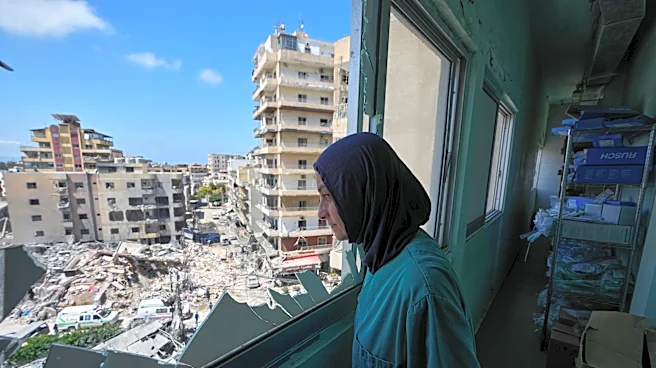
The weakening of Iran's proxies represents a strategic loss for Tehran. Hezbollah's dominance in Lebanon is challenged by economic realities and shifting regional priorities. Lebanon's survival depends on external financial assistance, which may require limitations on Iranian influence. The broader regional environment is pulling Beirut toward economic integration and political stabilization. For Iran, this shift undermines its external defense perimeter, highlighting the fragility of its regional model.