




What's Happening?
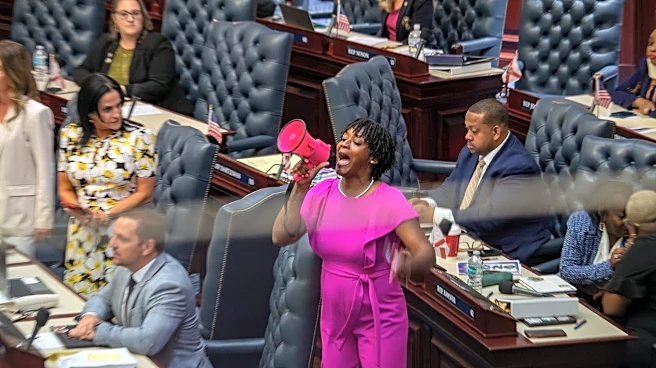
Florida Governor Ron DeSantis publicly confronted a protester during a state GOP campaign event in Tampa, accusing her of being paid by George Soros. When interrupted mid-sentence, DeSantis retorted, "Hey, Soros isn't paying you enough because you're
not very good at this," and added, "This ain't my first rodeo, lady. I've seen it all, and you ain't very good at it." He later advised hecklers that "standing up and screaming is not effective." A spokesperson for the Open Society Foundations, Soros's philanthropic group, responded by directing Fox News Digital to a 2025 statement clarifying that they "do not pay people to protest or directly train or coordinate protestors," while affirming support for nonviolent public protests.
Why It's Important?
This incident is important as it highlights the increasingly confrontational nature of political discourse in the U.S. Governor DeSantis's direct and aggressive response to a protester, coupled with his accusation of her being a paid agent of George Soros, reflects a common tactic in contemporary politics to discredit opposition by linking them to controversial figures or external funding. This approach can energize his base but also further polarize the political landscape. The exchange underscores the challenges faced by public figures in managing disruptions at events and the broader implications of how political leaders choose to engage with dissent. The response from the Open Society Foundations also emphasizes the ongoing debate about the role of philanthropic organizations in political activism.
What's Next?
This event is likely to be widely discussed in political media and on social media platforms, further solidifying Governor DeSantis's image among his supporters as a strong, no-nonsense leader. It may also draw criticism from opponents who view his remarks as dismissive of free speech or as promoting conspiracy theories. The incident could encourage similar confrontational tactics from both politicians and protesters in future events, potentially escalating tensions. The Open Society Foundations may continue to reiterate their stance on funding and protests, but the narrative linking Soros to political activism is deeply entrenched in certain political circles, making it difficult to dispel.
Beyond the Headlines
The exchange between Governor DeSantis and the protester delves into deeper issues of political communication, the weaponization of rhetoric, and the erosion of civil discourse. The accusation of being a "Soros protester" taps into a well-established narrative within conservative media, suggesting that dissent is not organic but rather orchestrated and funded by a shadowy figure. This narrative can undermine legitimate protest movements and foster distrust in democratic processes. It also raises questions about the responsibility of public figures to engage respectfully with constituents, even those who are disruptive, and the impact of their rhetoric on the broader political culture. The incident reflects a trend where political events are increasingly becoming arenas for direct, often aggressive, confrontations rather than solely platforms for policy discussion.