





What's Happening?
Online login processes, serving as critical gatekeepers for digital resources, are undergoing significant evolution to enhance security against increasingly sophisticated cyber threats. The traditional password-based system is being augmented by more
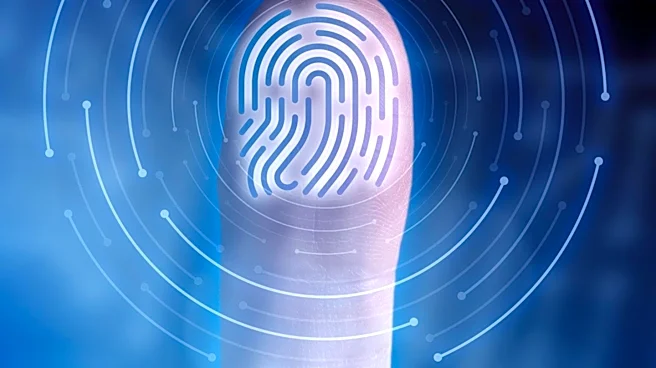
complex layers of identity verification. Multi-Factor Authentication (MFA) has become a new standard, requiring users to provide more than one method of verification from independent categories, such as something they know (password) and something they have (a smartphone for a code). The rise of biometrics, utilizing 'something you are' factors like fingerprint or facial recognition, further strengthens security while offering convenience. These systems map unique physical characteristics into digital data for verification. The underlying architecture involves cryptographic hashing of passwords, often with 'salting' and 'peppering' to protect against attacks. Organizations are implementing robust Identity and Access Management (IAM) systems to centralize user identity and access privilege management.
Why It's Important?
The advancements in online login security are crucial for protecting sensitive data and maintaining trust in the digital economy. For U.S. businesses and consumers, the widespread adoption of MFA and biometrics significantly reduces the risk of data breaches and identity theft, which can have severe financial and reputational consequences. Weak login security can lead to unauthorized access to personal financial accounts, corporate networks, and critical infrastructure. The tension between convenience and security is a key challenge; overly cumbersome login processes can lead to user frustration and insecure workarounds. The implementation of robust IAM systems is vital for corporate governance and data protection, ensuring that access to sensitive information is tightly controlled and managed, especially in an era of remote work and distributed digital assets. These security measures are foundational to the integrity of online transactions and digital interactions across all sectors.
What's Next?
The future of online login is increasingly moving towards a passwordless model, aiming to eliminate vulnerabilities associated with traditional passwords. Standards like FIDO2 (Fast IDentity Online) enable passwordless login through security keys or platform authenticators built into devices. This approach enhances security by ensuring that private keys never leave the device and are bound to specific services, effectively neutralizing phishing and other attacks. Organizations are also exploring adaptive authentication, which analyzes the context of a login attempt (e.g., location, device) to determine the required level of security. This allows for a more seamless user experience while maintaining strong protection. Continued innovation in biometric technology, coupled with secure local storage of biometric data, will likely further refine the balance between security and convenience. User education on common pitfalls like password reuse and phishing remains critical, as human behavior is often the weakest link in the security chain.
Beyond the Headlines
The evolution of online login systems has profound implications for digital citizenship and privacy. As biometric data becomes more prevalent in authentication, ethical concerns arise regarding the collection, storage, and potential misuse of such immutable personal identifiers. The shift towards passwordless authentication, while offering enhanced security, also centralizes control over identity verification with technology providers and device manufacturers. This raises questions about digital autonomy and the potential for surveillance. The ongoing challenge is to develop and implement authentication technologies that are not only secure and convenient but also respect individual privacy and promote digital equity. The 'digital key' is becoming increasingly sophisticated, and its design will shape how individuals interact with the digital world, influencing everything from personal data access to participation in the digital economy. The balance between security, convenience, and privacy will continue to be a critical area of debate and innovation.