




What's Happening?
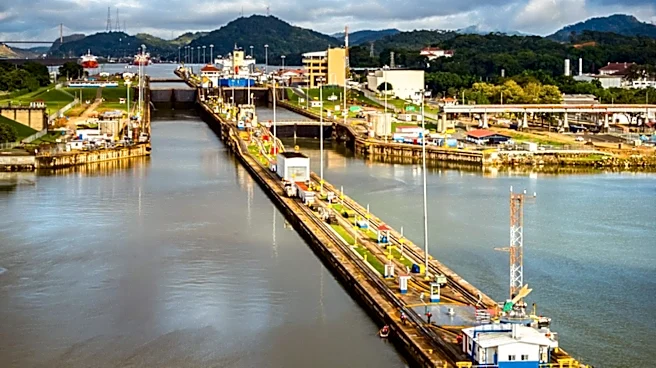
The Panama Canal Authority plans to implement further restrictions on maritime traffic due to a worsening drought caused by the El Niño climate phenomenon. Starting in October, the average number of vessels allowed to transit daily will be reduced to 29.5,
an 18% decrease from the 36 transits permitted in August. This follows an initial reduction in September from 36 to 32 daily transits. The canal, which handles 5% of global maritime trade and approximately 40% of U.S. container traffic, relies on fresh water from rivers flowing into Lake Gatun to operate its lock system. Officials reported lower-than-forecast rainfall in the watershed, leading to declining lake levels. The El Niño event is projected to be one of the strongest in four decades, with global air and ocean temperatures spiking and precipitation patterns shifting dramatically.
Why It's Important?
The escalating restrictions on the Panama Canal have significant implications for global trade and, consequently, for U.S. businesses and consumers. As a critical shipping lane, particularly for goods moving between Asia and the U.S., reduced traffic capacity will lead to increased transit times and higher shipping costs. This can result in supply chain disruptions, delayed deliveries, and potentially higher prices for imported goods in the U.S. Businesses that rely on the canal for efficient and cost-effective transportation of raw materials and finished products will face operational challenges and increased expenses. The situation underscores the vulnerability of global supply chains to climate-related disruptions and the economic ripple effects that can stem from environmental changes in key logistical arteries.
What's Next?
The Panama Canal Authority's restrictions are expected to tighten further as the El Niño phenomenon intensifies, which is forecast to peak later this year. Shippers will likely continue to face longer wait times and increased costs, potentially leading some to seek alternative, longer routes, further impacting transit times and fuel consumption. The situation will necessitate ongoing monitoring by global logistics companies and governments to mitigate supply chain disruptions. Discussions around long-term solutions for the canal's water management, including potential infrastructure upgrades or alternative operational strategies, may gain urgency as climate change continues to affect rainfall patterns in the region.
Beyond the Headlines
The Panama Canal's struggle with drought highlights a broader, systemic challenge posed by climate change to critical global infrastructure. The canal, a marvel of engineering, is fundamentally dependent on a stable hydrological cycle, which is now being disrupted by extreme weather events. This situation reveals the fragility of human-made systems when confronted with large-scale environmental shifts. It also brings into focus the ethical and economic dilemmas of resource allocation, as the canal's operational needs compete with other water demands in the region. The crisis serves as a powerful reminder that climate change is not just an environmental issue but a profound economic and geopolitical one, capable of reshaping trade routes, influencing international relations, and driving innovation in sustainable logistics.