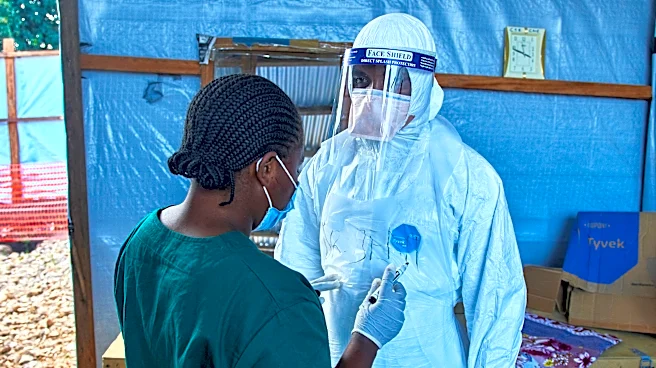










What's Happening?
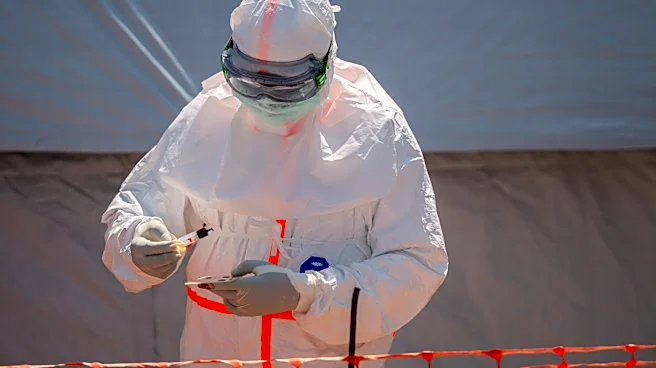
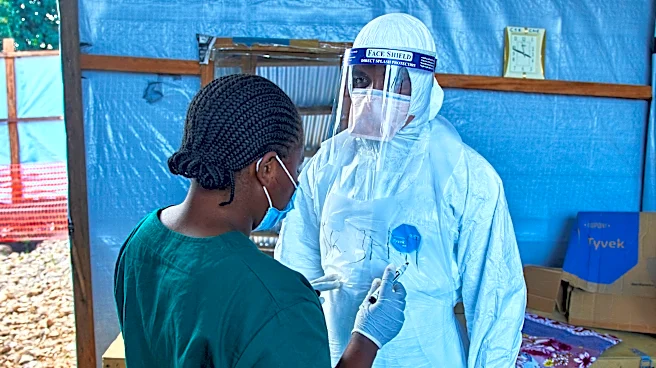
The Democratic Republic of the Congo is experiencing a severe Ebola outbreak, with the death toll reaching 600. The outbreak, which began in Ituri province, has now spread to previously unaffected areas, including Tshopo and Haut-Uele provinces. The Congolese
health ministry reported new suspected cases in these regions, indicating the virus's continued spread. The outbreak is attributed to the Bundibugyo virus, a rare strain with no approved vaccine or treatment. Efforts to control the outbreak are challenged by a lack of funding, attacks on health centers, and ongoing conflict in eastern Congo. The World Health Organization noted that the disease had been spreading undetected for weeks before the official declaration of the outbreak on May 15. Clinical trials for potential treatments have recently commenced, aiming to curb the virus's impact.
Why It's Important?
The escalating Ebola outbreak in Congo poses significant public health challenges, not only for the country but potentially for the broader region. The spread to new provinces highlights the difficulty in containing the virus, especially in areas with limited healthcare infrastructure. The lack of an approved vaccine or treatment for the Bundibugyo virus strain complicates response efforts. The outbreak's progression could strain international health resources and necessitate increased global cooperation and funding to prevent further spread. Additionally, the ongoing conflict in eastern Congo exacerbates the situation, hindering effective healthcare delivery and increasing the risk of further transmission. The outbreak underscores the need for robust health systems and rapid response mechanisms to manage infectious disease threats.
What's Next?
The Congolese government and international health organizations are likely to intensify efforts to contain the outbreak. This may include scaling up clinical trials for potential treatments and increasing funding to support healthcare infrastructure in affected regions. The international community may also need to provide additional resources and support to address the outbreak's challenges. Monitoring and surveillance efforts will be crucial to prevent further spread, especially in conflict-affected areas. The situation may prompt discussions on improving global preparedness for infectious disease outbreaks, emphasizing the importance of early detection and rapid response capabilities.