
What's Happening?
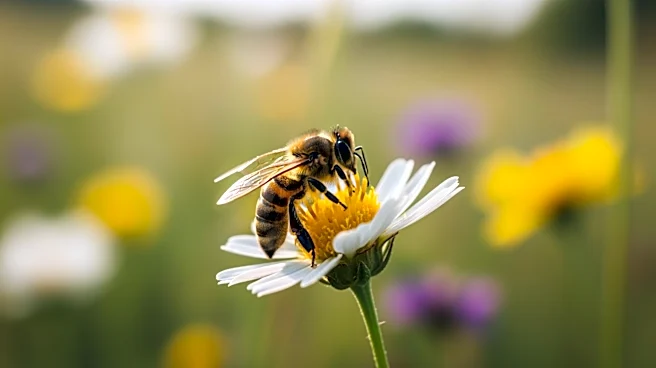
A study published in Nature highlights the significant role of pollinators, such as bees and hoverflies, in supporting human health and agricultural income. The research, conducted in rural Nepal, found
that pollinators contribute to over 20% of people's intake of essential vitamins and more than 40% of farmers' income. The decline of pollinators, driven by climate change and habitat loss, poses a threat to these communities. However, the study suggests that simple interventions, like planting wildflowers and reducing pesticide use, can help reverse pollinator decline and improve health and economic outcomes.
Why It's Important?
The study emphasizes the critical importance of biodiversity and ecosystem services in sustaining human health and livelihoods. Pollinators play a vital role in food production and nutrition, particularly in rural communities that rely heavily on agriculture. The decline of pollinators could lead to reduced crop yields, lower income for farmers, and decreased nutritional intake, exacerbating poverty and health issues. By highlighting the economic and health benefits of preserving pollinators, the research advocates for conservation efforts that can enhance food security and promote sustainable development.
What's Next?
Efforts to preserve pollinators may involve policy changes and community initiatives focused on habitat restoration and sustainable agricultural practices. Governments and environmental organizations could collaborate to implement conservation programs that support pollinator populations. Additionally, further research may explore the specific impacts of pollinator decline on different regions and crops, informing targeted interventions. Public awareness campaigns could educate communities about the importance of pollinators and encourage practices that support biodiversity.