







What's Happening?
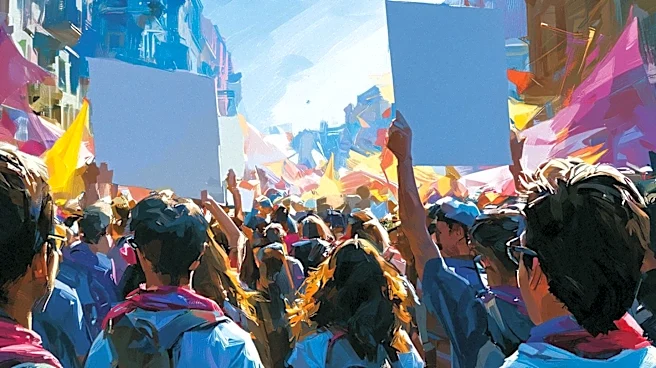
Mass student demonstrations have taken place in several cities across the Czech Republic, including Prague, where approximately 4,000 people gathered. Students are protesting against planned changes to the funding of Czech Television and Czech Radio,
fearing that a new funding approach could compromise the independence of public broadcasters. Additionally, protesters expressed disagreement with the government’s policies concerning culture, education, and science, including the funding of state universities and research institutions. Representatives from academic and media communities, such as Jiří Zima, rector of Charles University, and Thibault Bruttin, director of Reporters Without Borders, joined the demonstrations.
Why It's Important?
These protests in the Czech Republic highlight a critical issue with potential implications for democratic societies globally, including the U.S.: the independence of public media and the government's role in funding cultural and educational institutions. The U.S. also grapples with debates over media impartiality and the allocation of public funds to arts and sciences. If public broadcasters lose financial independence, it can lead to a chilling effect on journalistic integrity and the diversity of information available to citizens. Similarly, underfunding education and science can hinder innovation and long-term societal progress. The protests serve as a reminder of the importance of a free press and robust public institutions for a healthy democracy, resonating with ongoing discussions in the U.S. about media trust and educational investment.
What's Next?
The student protests in the Czech Republic are likely to continue exerting pressure on the government to reconsider its proposed changes to public media funding and its broader policies on culture, education, and science. The involvement of academic and media leaders suggests a sustained and organized opposition. The government will face increasing scrutiny, potentially leading to negotiations or modifications of its plans to mitigate public backlash. For the U.S., these events could serve as a case study in civic engagement and the defense of democratic institutions, potentially influencing advocacy efforts related to media independence and public funding for education and research.
Beyond the Headlines
The protests in the Czech Republic delve into deeper questions about the balance of power between government and independent institutions, particularly in the digital age where information integrity is constantly challenged. The fear that changes in funding could affect media independence touches upon the fundamental principle of a free press as a watchdog against government overreach. Furthermore, the broader concerns about culture, education, and science funding reflect a societal debate about national priorities and investment in intellectual capital. These issues are not unique to the Czech Republic; they are central to the ongoing discourse in the U.S. and other democracies about safeguarding democratic values and fostering an informed citizenry in an era of political polarization and economic pressures.