






What's Happening?
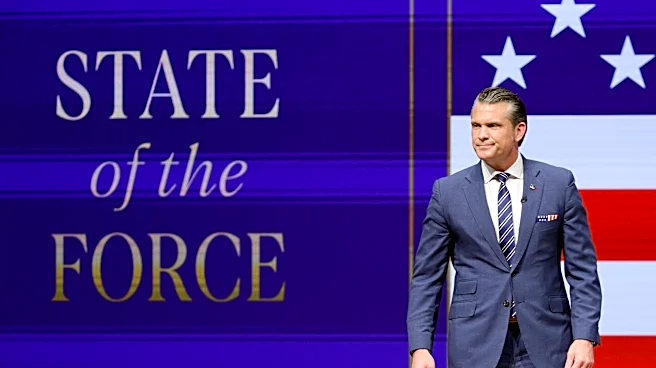
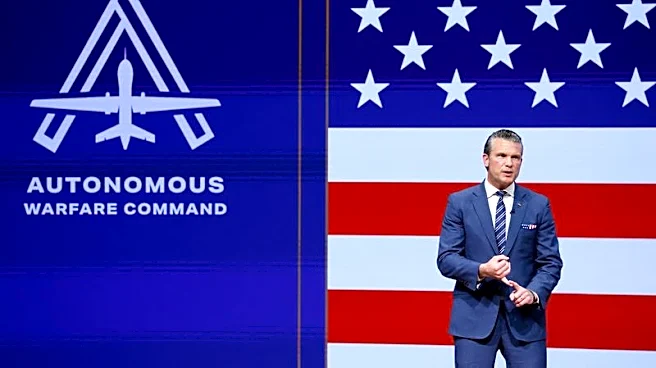
Defense Secretary Pete Hegseth has announced significant changes to the U.S. military, including a 20% reduction in the number of generals and admirals and the establishment of a new four-star drone command. This directive doubles the 10% reduction in flag
and general officer positions ordered last spring, with the total 20% decrease to be completed by January 1, 2027. Hegseth made these announcements during his 'State of the Force' address at Marine Corps Base Quantico in Virginia. He also revealed plans for a study on the future of warfare, to be led in part by SpaceX CEO Elon Musk and former Republican House Speaker Newt Gingrich. Additionally, the Pentagon will create an Office of Religious Affairs and plans to build a new military base, the first in 40 years, inviting all 50 states to compete to host 15,000 to 25,000 service members. These changes come as the U.S. military is seven months into a war with Iran, has captured Venezuelan leader Nicolás Maduro, and conducted strikes in Latin America.
Why It's Important?
The announced 20% reduction in general and admiral ranks signifies a major restructuring within the U.S. military's leadership, which Secretary Hegseth described as 'accountability and long overdue.' This move has drawn criticism from some members of Congress, who view it as a 'purge' that could take years to recover from, potentially impacting military readiness and institutional knowledge. The creation of a new drone command underscores a strategic shift towards autonomous and robotic warfare capabilities, acknowledging the evolving nature of modern conflicts, as seen in the war with Iran and Ukraine's use of drones. This focus on advanced technology, coupled with the involvement of figures like Elon Musk and Newt Gingrich in studying future warfare, indicates a push for rapid innovation and adaptation within the defense sector. The plan to build a new military base and make existing bases self-powered also highlights a long-term vision for military infrastructure and energy independence, potentially stimulating economic activity in the state chosen for the new base.
What's Next?
The U.S. military will proceed with the 20% reduction in general and admiral positions, aiming for completion by January 1, 2027. This process is likely to involve significant internal reorganization and could face continued scrutiny and debate from Congress. The establishment of the new four-star drone command will require the development of new operational structures, training programs, and technological integration to effectively oversee autonomous and robotic capabilities. The study on the future of warfare, led by Elon Musk and Newt Gingrich, is expected to shape long-term defense strategies and investments in advanced weapon systems. Furthermore, the Department of Defense will begin the process of selecting a location for the new military base, with all 50 states invited to compete, which will involve detailed proposals and evaluations. The initiative to make military bases self-powered will also move forward, likely involving partnerships with energy companies and significant infrastructure upgrades across various installations.
Beyond the Headlines
The significant reduction in military leadership, labeled a 'purge' by some lawmakers, could have profound implications for military morale, career progression, and the institutional culture of the U.S. armed forces. It raises questions about the balance between efficiency and experience within the command structure. The emphasis on drone warfare and autonomous systems, while strategically necessary, also brings ethical considerations regarding the increasing reliance on AI and robotics in combat, and the potential for reduced human oversight. The involvement of private sector leaders like Elon Musk in shaping future warfare strategies blurs the lines between government and corporate influence in national defense, potentially accelerating technological adoption but also raising concerns about accountability and commercial interests. The broader context of the ongoing war with Iran and other global military engagements suggests that these changes are not merely administrative but are driven by immediate operational needs and a long-term vision for maintaining military superiority in a rapidly changing geopolitical landscape.