

What's Happening?
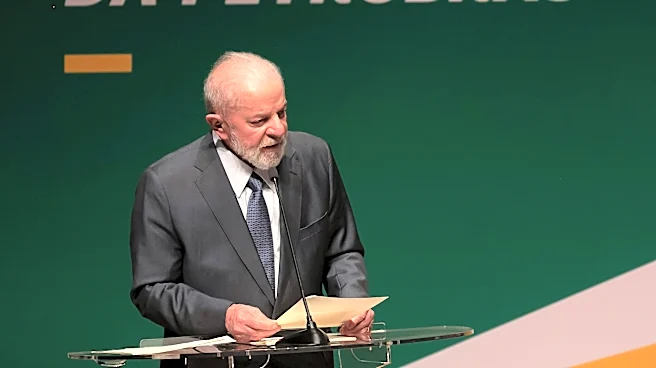
Brazilian President Luiz Inácio Lula da Silva has publicly defended petroleum exploration off the coast of Amapá, a state in the Amazon region. He views this exploration as a crucial opportunity to generate financial resources that will enable Brazil to transition
towards cleaner energy sources. During a visit to a Petrobras survey vessel in the Equatorial Margin, Lula da Silva articulated a strategy where current oil resources would fund the development of renewable energies, preparing the country for a low-emission economy. He emphasized that Brazil should not immediately abandon fossil fuels but rather use the revenue from oil to drive the transformation of its energy matrix. The President also highlighted Petrobras's technological capabilities for deep-water operations and its mechanisms to prevent environmental damage, asserting that Brazil can balance natural resource exploitation with environmental preservation, particularly given the extensive protected areas and forest cover in Amapá. He envisions Brazil becoming an international leader in renewable energies while strategically utilizing its oil reserves during this transition period.
Why It's Important?
This policy stance by President Lula da Silva is significant as it outlines a pragmatic approach to energy transition for a major global economy and a critical environmental steward. By proposing to leverage existing fossil fuel wealth to finance renewable energy development, Brazil aims to avoid the immediate economic shocks that a rapid divestment from oil might entail, while still committing to a greener future. This strategy could serve as a model for other developing nations rich in natural resources, offering a pathway to sustainable development without sacrificing economic stability. However, it also presents a delicate balancing act, as increased oil exploration in the Amazon region, even with safeguards, raises concerns among environmental groups and international bodies about potential ecological impacts. The success or failure of this approach could influence global climate policy discussions, particularly regarding the role of developing countries in the energy transition and the feasibility of funding green initiatives through traditional energy sectors. The decision reflects a complex interplay between economic necessity, national sovereignty over resources, and global environmental responsibilities.
What's Next?
The immediate next steps will likely involve further detailed planning and environmental assessments for the proposed oil exploration projects in the Amapá region. Petrobras, the state-owned oil company, will be central to these developments, implementing the necessary technological and environmental safeguards as highlighted by President Lula da Silva. Domestically, the policy will face scrutiny from environmental organizations, indigenous communities, and political opposition, potentially leading to debates and legal challenges regarding the scope and impact of the exploration. Internationally, Brazil's commitment to both resource exploitation and environmental preservation will be closely watched by global climate advocates and trading partners. The government will need to demonstrate transparently how the revenues generated from oil exploration are indeed channeled into renewable energy projects and how environmental risks are effectively mitigated. The long-term success of this strategy will depend on its ability to deliver tangible progress in renewable energy capacity while maintaining the ecological integrity of the Amazon, a critical global ecosystem.
Beyond the Headlines
The deeper implications of President Lula da Silva's energy strategy extend to the global discourse on climate justice and the responsibilities of developed versus developing nations. This approach challenges the notion that developing countries must immediately cease all fossil fuel activities, arguing instead for a self-funded transition that acknowledges their economic realities and resource endowments. It highlights the tension between immediate economic development needs and long-term environmental sustainability, particularly in regions with significant natural resources. Ethically, it raises questions about the acceptable level of environmental risk in pursuit of economic growth and green energy funding. Culturally, it could influence how nations perceive their natural resources—not just as commodities, but as transitional assets to fund a sustainable future. The policy also underscores Brazil's assertion of sovereignty over its natural resources and its right to determine its own path to development, potentially setting a precedent for other nations in the Global South navigating similar challenges.