




What's Happening?
A bipartisan committee of the New Mexico Legislature, the Radioactive and Hazardous Materials Committee (RHMC), has issued a warning regarding an 'urgent threat' to workers, communities, and national security due to federal nuclear administration changes.
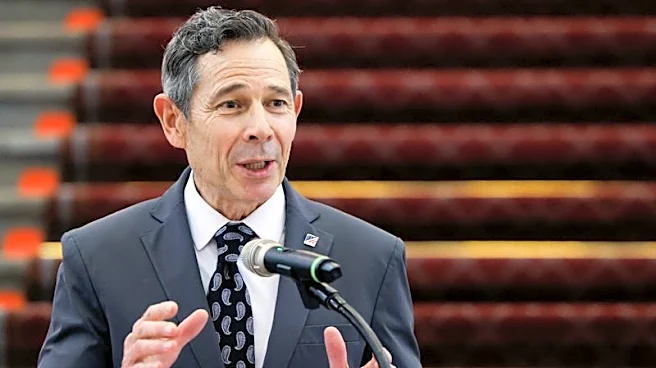
The committee unanimously approved letters from its chair, State Senator Jeff Steinborn (D-Las Cruces), to U.S. Energy Secretary Chris Wright and President Trump. These letters call for immediate federal intervention to address nuclear safety concerns. The RHMC expressed grave concern that extensive changes to nuclear safety requirements, specifically 46 new or revised directives issued by the U.S. Department of Energy (DOE) in August, have proceeded without sufficient transparency or critical review. Lawmakers contend that subject matter experts were excluded from the process and that these new directives pose serious risks to New Mexico residents. The DOE's 'Project Velocity' is characterized as an effort to reduce regulatory requirements, with some eliminated safety requirements having been implemented due to past incidents in New Mexico, such as a multiyear shutdown at the Los Alamos Laboratory plutonium facility and a 2014 radioactive material leak at the Waste Isolation Pilot Plant.
Why It's Important?
This development is critical for national security and public safety, particularly for states like New Mexico that host significant nuclear facilities. The alleged rollback of safety requirements and obstruction of independent oversight by the DOE could increase the risk of nuclear incidents, impacting the health and safety of workers and surrounding communities. The lack of transparency and exclusion of technical experts in revising these directives undermine public trust and potentially compromise the integrity of nuclear operations. Furthermore, the inability of the U.S. Defense Nuclear Facilities Safety Board to achieve a quorum due to unfilled seats weakens a crucial layer of independent oversight, leaving the nation's nuclear enterprise more vulnerable. Past incidents in New Mexico underscore the tangible risks associated with inadequate safety protocols, making the current concerns a matter of significant public and environmental health. The situation highlights a tension between regulatory efficiency and robust safety measures in critical national infrastructure.
What's Next?
The letters from the New Mexico Legislature's RHMC to U.S. Energy Secretary Chris Wright and President Trump demand immediate federal intervention. This could prompt a review of the DOE's 'Project Velocity' and the 46 new or revised directives. The call for President Trump to fill the vacant seats on the U.S. Defense Nuclear Facilities Safety Board is crucial for restoring the board's ability to function and provide independent oversight. Without a three-member quorum, the board cannot issue formal safety recommendations, leaving a significant gap in accountability. The state's congressional delegation and Governor Michelle Lujan Grisham have also received these letters, suggesting potential coordinated action at both state and federal levels to pressure the administration for a response. The situation may lead to increased scrutiny from other states with nuclear facilities and potentially trigger congressional hearings or investigations into the DOE's regulatory changes and the status of nuclear safety oversight.
Beyond the Headlines
The concerns raised by New Mexico lawmakers extend beyond immediate safety risks, touching upon broader issues of federal agency accountability, transparency in governance, and the balance of power between executive agencies and independent oversight bodies. The alleged sidelining of subject matter experts and the lack of critical review in implementing significant policy changes could set a dangerous precedent for other highly technical and sensitive sectors. This situation also highlights the long-term environmental and health justice implications for communities living near nuclear sites, who often bear the brunt of any safety failures. The historical context of incidents in New Mexico, which led to the very safety requirements now being weakened, underscores a potential cyclical pattern of regulatory relaxation followed by renewed crises. This raises ethical questions about prioritizing operational efficiency over established safety protocols and the responsibility of the federal government to protect its citizens from potential hazards associated with nuclear activities.