






What's Happening?
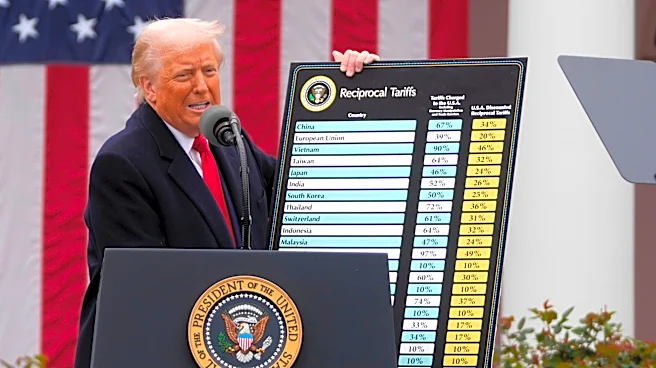
A coalition of 25 U.S. states has filed a lawsuit against the Trump administration over new tariffs ranging from 10% to 12.5% on goods from 60 trading partners, including major economies like Canada, Japan, and China. The lawsuit, filed in the U.S. Court
of International Trade, seeks to block the tariffs, declare them unlawful, and secure refunds for duties already collected. The states argue that these tariffs, which cover 99.4% of U.S. imports, are an illegal attempt to replace previous import taxes struck down by the U.S. Supreme Court. The Trump administration justifies the tariffs as a response to countries failing to prevent imports made with forced labor.
Why It's Important?
The lawsuit represents a significant challenge to the Trump administration's trade policies, which have been a contentious issue throughout his presidency. The tariffs could have widespread economic implications, potentially increasing costs for consumers and businesses by raising prices on imported goods. This legal battle also underscores the tension between state governments and federal trade policy, highlighting the complexities of balancing national trade interests with state-level economic impacts. The outcome of this lawsuit could set a precedent for future trade policy and executive authority in imposing tariffs.
What's Next?
The legal proceedings will determine whether the tariffs will be upheld or struck down, impacting U.S. trade relations and economic policy. If the court rules against the Trump administration, it could lead to a rollback of the tariffs and refunds for duties collected, affecting international trade dynamics. The case may also prompt further scrutiny of the administration's use of executive authority in trade matters, potentially influencing future policy decisions. Stakeholders, including businesses and trade partners, will be closely monitoring the case's developments.